2026 Top Water Care Products for Global Buyers?

Time:2026-10-01 Author:Mason
0%

As global buyers prepare for 2026, Water Care is becoming a practical purchasing priority, not merely a household upgrade. The WHO/UNICEF Joint Monitoring Programme reported that 2.2 billion people lacked safely managed drinking water in 2022. This figure reveals a difficult reality: water quality needs differ sharply between cities, farms, hotels, and remote communities.

The UN World Water Development Report 2024 highlighted growing pressure from water scarcity, pollution, climate change, and unequal access. These pressures are shaping demand for filtration systems, UV disinfection units, softeners, leak sensors, and real-time water monitors. However, product selection should begin with verified performance, not attractive packaging. Buyers should examine contaminant-removal claims, testing standards, replacement-filter costs, energy use, installation requirements, and after-sales support. Small details matter. A filter may work well, yet become ineffective when cartridges are ignored.

Water expert Peter Gleick has stated, “If there is a crisis in water, it is a crisis of governance.” His observation remains relevant for international procurement. Responsible Water Care depends on maintenance, transparent data, and local operating knowledge. It also requires suppliers to explain limitations honestly. No single device solves every water problem.

This guide reviews leading 2026 product categories for global buyers. It compares practical applications, certification considerations, operating costs, and user risks. The ranking is useful, but not absolute. Local testing should come before large orders. That step is sometimes overlooked.
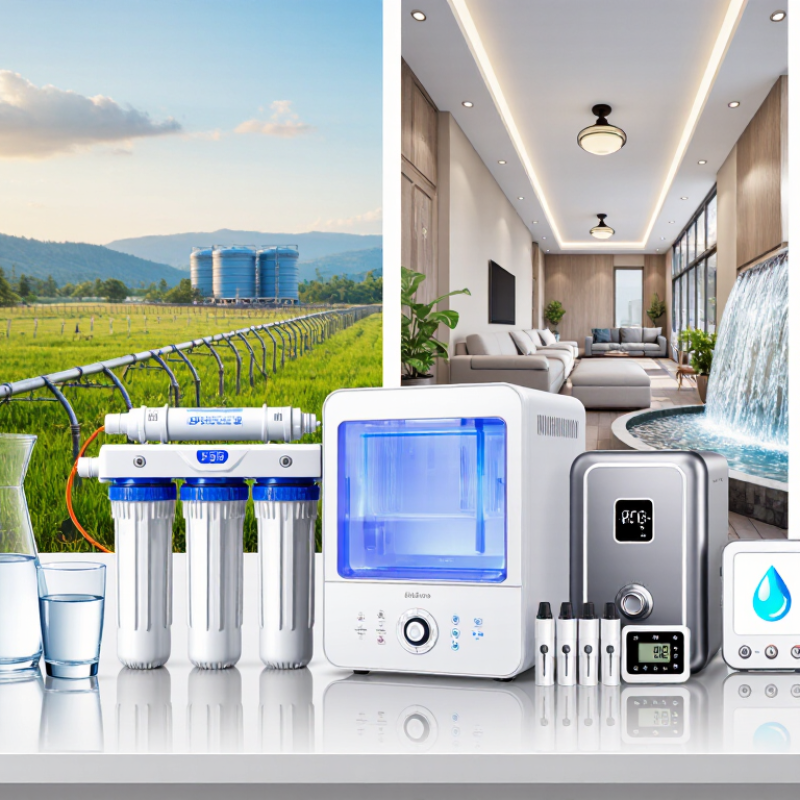
2026 Top Water Care Products for Global Buyers?

What Are Water Care Products and Why Do Global Buyers Need Them?

2026 Top Water Care Products for Global Buyers?

Water care products are tools that improve water quality, safety, and usability. They include sediment filters, activated carbon units, membranes, ultraviolet systems, test kits, softeners, and controlled dosing equipment. Each product targets a different risk. A carbon filter may reduce unpleasant taste, while a membrane can remove many dissolved substances. Neither solution works for every water source.

The need is substantial.

The WHO/UNICEF Joint Monitoring Programme reported that 2.2 billion people lacked safely managed drinking water in 2022. The UN World Water Development Report 2024 also stated that about half the global population faces severe water scarcity during part of each year.

These figures affect households, hotels, factories, farms, and public facilities. Buyers therefore need products matched to local water chemistry, climate, infrastructure, and maintenance skills.

Fit matters more than marketing claims.

A compact purifier may suit a small apartment, but not a high-volume food facility. Buyers should review laboratory test results, flow rates, replacement intervals, energy use, and certification records. The WHO Guidelines for Drinking-water Quality remain a useful technical reference. Yet product labels can still confuse inexperienced purchasers.

A “cleaner” water claim may describe taste improvement, not pathogen removal. That distinction deserves careful attention.

Procurement teams should test incoming water before ordering equipment, then verify treated water regularly. Even good systems fail when cartridges are overdue, sensors drift, or users misunderstand instructions.

Which Water Care Product Categories Will Matter Most in 2026?

Water care priorities in 2026 will reflect public health pressure, not just household convenience.

The WHO/UNICEF Joint Monitoring Programme reported that 2.2 billion people lacked safely managed drinking water in 2022. This gap keeps purification and reliable storage highly relevant for global buyers. Point-of-use filters, ultraviolet systems, and compact disinfection units should remain strong categories, especially where municipal quality varies.

Evidence matters more than sleek packaging. Buyers should check contaminant claims, replacement intervals, flow rates, and testing against recognized NSF/ANSI standards. PFAS reduction, lead removal, microbial control, and hardness management will attract attention, but one device rarely solves every problem. That is often overlooked.

Water testing kits and connected monitoring tools will also grow, helping users detect turbidity, conductivity changes, leaks, and filter exhaustion.

The U.S. Environmental Protection Agency has identified household water efficiency and leak control as practical conservation priorities. Still, smart sensors can create false confidence when calibration is poor or internet access is unstable.

For commercial buildings and remote facilities, water reuse equipment may become more important.

The United Nations World Water Development Report 2024 highlighted rising water stress and the need for resilient water management.

Greywater treatment, rainwater filtration, and modular recycling systems fit that direction. Yet maintenance remains the weak point. A technically advanced system with unavailable cartridges is not a dependable product. Global buyers should value service networks, clear manuals, verified performance data, and locally replaceable parts over impressive specifications.

How to Match Water Care Products With Different Water Treatment Needs

2026 Top Water Care Products for Global Buyers?

How to Match Water Care Products With Different Water Treatment Needs

Global buyers should match water care products to measured problems, not attractive product lists. A clear glass sample can reveal sediment, but it cannot show dissolved salts or microbial risk. Start with a recent laboratory report covering hardness, iron, turbidity, pH, conductivity, and microbiological indicators. Source changes matter. A well-designed solution begins with water, not equipment.

A well-designed solution begins with water, not equipment.

For muddy well water, use a sediment prefilter with a suitable micron rating. Activated carbon can reduce chlorine taste, odors, and some organic compounds. It does not reliably remove hardness or every contaminant. Hard water often needs ion exchange softening, while high salinity may require reverse osmosis. Ultraviolet treatment can control microorganisms only when water is clear and lamps receive regular maintenance. For household drinking points, combine stages carefully rather than adding every available device.

Flow rate, pressure, replacement intervals, and wastewater volume affect real operating cost. A cartridge that lasts six months in one city may clog within weeks elsewhere. I have seen buyers overlook this detail. It creates frustration. Ask suppliers for test data, material specifications, maintenance instructions, and performance limits. Independent certification can support credibility, but it should match the intended use and local requirements. Pilot testing is wise when water chemistry changes seasonally. Even expert selections need review after installation.

How to Evaluate Quality, Safety, Cost, and Supplier Reliability

Choosing water care products for 2026 requires more than comparing online prices. In field purchasing, I check the product’s intended water type, dosage range, and storage conditions. A clear technical data sheet should list active ingredients, purity, pH impact, shelf life, and batch identification. Independent laboratory reports add credibility, especially when they confirm contaminant limits and performance claims. Vague phrases such as “advanced formula” deserve careful questioning.

Safety must cover workers, users, and transport. Review the safety data sheet before requesting samples. Check handling instructions, protective equipment, spill response, and packaging strength. Products should comply with the destination market’s applicable chemical, water, and labeling requirements. Testing should use traceable methods, not only internal screenshots. Small details matter, such as a sealed cap, readable lot code, and intact inner liner.

Cost is more than the purchase price. Calculate dosage, freight, customs charges, storage space, and disposal needs. A cheaper powder may dissolve poorly and create extra labor. Supplier reliability also needs evidence. Ask for production capacity, quality-control records, sample approval procedures, and realistic lead times. Contactable references can reveal whether delays are occasional or routine. I have learned that attractive brochures prove little. My evaluation process is not perfect either; I sometimes focus too heavily on technical documents and overlook communication speed. A short trial order, inspection photos, and written change-notification terms can expose those weaknesses before a larger commitment.

2026 Top Water Care Products for Global Buyers

How to evaluate quality, safety, cost, and supplier reliability

Quality & Safety
Request independent laboratory results showing treated water meets relevant contaminant limits and achieves zero detectable E. coli in a 100 mL sample.
Cost
Compare purchase price, replacement-filter cost, energy use, maintenance frequency, shipping, and total cost per litre.
Supplier Reliability
Verify documented quality control, spare-part availability, warranty terms, production capacity, delivery performance, and after-sales support.

Chemical screening benchmarks shown in mg/L: arsenic 0.010, lead 0.010, fluoride 1.5, and nitrate 50. Values are based on WHO Guidelines for Drinking-water Quality. Product performance varies by technology, operating conditions, and maintenance. Source: World Health Organization

How Global Buyers Can Plan Sourcing, Compliance, and Market Entry

Global buyers planning water care products for 2026 should connect sourcing decisions with compliance and market entry from the beginning. A filter, testing kit, or dosing system may face different requirements in each destination. Confirm whether the product serves drinking water, industrial use, or pools. This affects testing, labeling, materials, and permitted performance claims.

Build a supplier file before requesting large quantities. Check factory capacity, quality procedures, batch records, and material declarations. Ask for recent test reports, not only sample documents. Review contact surfaces carefully, especially plastics, seals, and metal parts. Packaging should show model details, usage limits, warnings, and traceability information. Local import rules may also require language-specific instructions or responsible parties. Compliance is not a single certificate.

Market entry needs practical evidence. Test samples under real conditions, such as hard water, cold storage, or continuous daily use. Compare flow rate, replacement cost, maintenance time, and waste output. A low purchase price can create expensive customer complaints. Small pilot orders are safer than immediate container volumes. They also reveal whether instructions are clear to local users.

Our first forecast may be wrong. Demand can change with climate, housing standards, and public concerns about water quality. Keep a review schedule for regulations, supplier performance, and customer feedback. A spreadsheet helps, but it can still miss a weak seal or confusing label. Reliable sourcing comes from repeated checks, documented decisions, and the willingness to revise an attractive plan.

2026 Top Water Care Products for Global Buyers? - How Global Buyers Can Plan Sourcing, Compliance, and Market Entry
Buyer planning matrix based on treatment function, commonly referenced standards, installation complexity, and market-entry considerations. Product performance must be validated against the target water source and the claims made on the label.
Product Category Main Treatment Function Typical Application Typical Performance Range or Configuration Key Buyer Specification Data Commonly Referenced Standards or Regulatory Areas Installation and After-Sales Burden Best-Fit Market Entry Position Sourcing Readiness
Activated Carbon Filters Reduces chlorine taste and odor; some certified media can reduce selected organic chemicals. Point-of-use drinking water, countertop units, under-sink systems, refrigerator filtration. Granular or carbon-block media; flow rate and capacity vary substantially by carbon type, contact time, and housing design. Media type, rated capacity, flow rate, pressure drop, chlorine-reduction test method, replacement interval, food-contact materials. NSF/ANSI 42 is commonly used for aesthetic effects such as chlorine, taste, and odor. Specific contaminant claims require separate substantiation. Low to medium; simple installation, but cartridge replacement and correct disposal must be planned. Entry-level drinking-water improvement and modular filtration platforms. High
Certified Lead-Reduction Filters Reduces lead when the product is specifically tested and certified for the claim. Point-of-use drinking water in buildings with potential lead plumbing components. Usually carbon-based or specialty media; performance depends on pH, flow rate, capacity, and influent concentration. Lead-reduction certification, rated capacity, end-of-life indicator, maximum flow rate, installation instructions, lot traceability. NSF/ANSI 53 is commonly referenced for health-related contaminant reduction claims. Local drinking-water product rules may also apply. Medium; replacement timing is safety-critical and user communication must be clear. Safety-oriented filtration with strong demand where lead-risk awareness is high. Medium
Reverse Osmosis Systems Uses a semipermeable membrane to reduce dissolved salts and many dissolved contaminants. Under-sink drinking-water systems, small commercial applications, selected low-volume process uses. Multi-stage systems commonly include sediment filtration, carbon pretreatment, membrane separation, and post-treatment; recovery and reject-water ratios vary by design. Permeate flow, recovery rate, feed-water limits, operating pressure, membrane life, storage volume, wastewater ratio, contaminant-reduction claims. NSF/ANSI 58 is commonly referenced for reverse-osmosis drinking-water treatment systems. Electrical products may require market-specific safety compliance. Medium to high; requires drainage, periodic filter and membrane replacement, sanitization, and pressure management. Premium drinking-water solution for dissolved-solids and specific contaminant concerns. Medium
Ultrafiltration Systems Physical membrane separation for suspended solids, colloids, and many microorganisms; dissolved salts generally pass through. Point-of-use drinking water, decentralized treatment, and selected rural or small-community systems. Membrane pore ratings are commonly in the ultrafiltration range; actual microbial performance depends on membrane integrity, pretreatment, and validation. Nominal or absolute rating, integrity testing, flux, backwash method, feed-water turbidity limit, membrane material, replacement procedure. Applicable drinking-water treatment standards depend on the claim and market. Microbiological claims require validated test evidence and safe system design. Medium; often lower water waste than RO, but cleaning and integrity monitoring may be required. Low-waste filtration where dissolved-salt removal is not the primary objective. Medium
Ultraviolet Disinfection Units Uses ultraviolet radiation to inactivate microorganisms when adequate dose and water clarity are maintained. Private wells, small buildings, hospitality sites, and decentralized drinking-water systems. Performance depends on UV dose, transmittance, flow rate, lamp age, sleeve cleanliness, and upstream filtration. Validated UV dose, flow-rate limit, UV sensor or alarm, lamp-life rating, sleeve material, electrical safety, pretreatment requirements. NSF/ANSI 55 is commonly referenced for ultraviolet microbiological water treatment systems. Medium; requires electricity, lamp replacement, sensor checks, and protection against high turbidity. Microbiological-risk control for clear water after suitable pretreatment. Medium
Water Softeners Reduces hardness ions, primarily calcium and magnesium, through ion exchange. Residential and commercial buildings with scale problems in plumbing, boilers, or appliances. Capacity is normally expressed as exchange capacity; salt use, regeneration frequency, water hardness, and flow demand determine operating cost. Exchange capacity, service flow, peak flow, salt efficiency, regeneration control, drain requirement, brine tank size, bypass arrangement. NSF/ANSI 44 is commonly referenced for residential cation-exchange water softeners. Local discharge and plumbing rules may apply. Medium to high; needs salt or regenerant management, drain access, commissioning, and regular servicing. Hard-water management and appliance-protection category rather than drinking-water purification. Medium
Iron and Manganese Removal Systems Reduces dissolved or particulate iron and manganese, depending on media, oxidation method, and water chemistry. Private wells and small water systems affected by staining, metallic taste, or deposits. Configurations may include oxidation, catalytic media, aeration, filtration, or chemical feed; results are highly water-specific. Laboratory water analysis, pH, iron and manganese concentration, hydrogen sulfide, dissolved oxygen, backwash rate, media life. Claims should be supported by performance testing under representative water chemistry. Drinking-water limits are market-specific. High; correct sizing, backwash flow, drainage, commissioning, and periodic media maintenance are important. Specialized well-water treatment sold through technical distributors or installers. Low
Sediment and Particulate Filters Reduces sand, rust, silt, and other suspended particles. Whole-house prefiltration, well-water systems, irrigation protection, and pretreatment for membranes. Common configurations include screen, spun, pleated, or depth cartridges; micron ratings may be nominal or absolute and must not be compared without definition. Micron-rating method, dirt-holding capacity, pressure drop, flow rate, housing size, material compatibility, replacement frequency. Material safety and plumbing requirements apply; contaminant-reduction claims should identify the test method and rating basis. Low; straightforward installation, but pressure-drop monitoring and timely replacement are required. High-volume accessory category and essential pretreatment component. High
Ceramic Filtration Products Physical filtration of particles and many microorganisms when pore structure and system design are suitable. Gravity-fed household units, portable treatment, emergency preparedness, and low-infrastructure settings. Flow rate decreases as the surface becomes loaded; some designs combine ceramic media with activated carbon or other treatment stages. Pore-rating basis, flow rate, cleaning method, breakage resistance, cartridge life, microbial test evidence, replacement availability. Applicable product and drinking-water requirements depend on the market and the specific microbiological claim. Low to medium; simple operation, but cleaning technique and physical damage inspection are important. Portable, gravity-fed, and resilience-focused water treatment. High
Chemical Dosing and Disinfection Equipment Adds a disinfectant or treatment chemical under controlled conditions. Commercial, institutional, process-water, and decentralized water systems. System output depends on pump accuracy, chemical concentration, contact time, residual control, and water demand. Dosing accuracy, turndown ratio, chemical compatibility, alarm functions, calibration interval, residual target, safety data, containment. Chemical approval, biocidal-product rules, electrical safety, machinery requirements, and worker-safety regulations may apply. High; requires trained operators, chemical handling, calibration, and documented maintenance. Professional treatment projects with technical service and compliance support. Low
Water-Quality Monitoring Devices Measures selected parameters such as conductivity, pH, turbidity, temperature, or residual disinfectant. Treatment-system monitoring, facility management, process control, and maintenance alerts. Accuracy, detection range, sensor stability, calibration frequency, data connectivity, and environmental conditions vary by parameter. Measurement uncertainty, calibration method, sensor replacement interval, data export, alarm thresholds, cybersecurity, enclosure rating. Electrical safety, radio-equipment, cybersecurity, and data-protection requirements may apply depending on connectivity and market. Medium; requires calibration, sensor maintenance, software support, and user training. Connected maintenance and compliance-monitoring ecosystem. Medium
Global buyer checkpoints for 2026:
  • Request a product-level performance dossier covering test conditions, influent water quality, rated flow, capacity, replacement parts, and claim limitations.
  • Separate aesthetic claims from health-related claims. A filter that improves taste or odor is not automatically proven to remove pathogens or regulated contaminants.
  • For the European market, assess requirements under the applicable drinking-water, materials-in-contact-with-water, electrical, chemicals, and product-safety frameworks.
  • For the United States, verify the applicable NSF/ANSI standard, certification scope, installation limitations, and state or local plumbing requirements.
  • For every destination, confirm labeling language, importer responsibilities, warranty terms, spare-part availability, packaging requirements, and end-of-life obligations.
  • Before mass production, test samples using representative local water conditions and confirm that the intended performance claim matches the exact production configuration.

FAQS

What are water care products?

They are tools that improve water quality, safety, or usability. Examples include sediment filters, carbon units, membranes, ultraviolet systems, and test kits. Softeners and dosing equipment are also common. Each tool targets different water problems.

Why must buyers test water before choosing equipment?

Water sources differ in hardness, dissolved substances, microbes, and sediment. A carbon filter may improve taste but not remove every hazard. A membrane may handle dissolved substances but require careful maintenance. Testing prevents an expensive mismatch.

Which product suits a small apartment?

A compact purifier may fit limited space and lower daily demand. Check its flow rate, replacement schedule, and waste output. The smallest option is not always the best option. Measure twice.

What documents should buyers request from suppliers?

Request technical data sheets, laboratory reports, safety documents, and batch records. Documents should show dosage, purity, pH impact, shelf life, and identification codes. Recent evidence matters more than attractive brochures. Brochures can mislead.

How can buyers evaluate product safety?

Review handling instructions, protective equipment, spill procedures, and storage conditions. Inspect sealed caps, readable lot codes, and intact inner liners. Packaging should survive transport without leaks or damage. Small details matter.

What costs should global buyers calculate?

Include product price, dosage, freight, customs charges, storage, maintenance, and disposal. A cheap powder may dissolve poorly and increase labor. Replacement parts can also change the total cost. Price alone is incomplete.

How can buyers check supplier reliability?

Ask about production capacity, quality controls, lead times, and sample approval procedures. Contactable references may reveal repeated delays. A short trial order can expose weak processes. I may still overvalue paperwork.

What should a market-entry pilot include?

Test samples under real conditions, including hard water, cold storage, or daily operation. Compare flow rate, replacement cost, maintenance time, and waste output. Check whether local users understand the instructions. Real use reveals hidden problems.

How should buyers manage changing regulations and demand?

Maintain a review schedule for regulations, supplier performance, and customer feedback. Check labeling, materials, language requirements, and permitted performance claims. A spreadsheet helps, but it may miss a weak seal. Plans need revision.

Conclusion

The 2026 water care market will focus on practical, efficient, and sustainable solutions for homes, commercial facilities, agriculture, and industrial operations. Water Care products may include filtration systems, purification equipment, softening solutions, disinfection tools, testing instruments, replacement components, and maintenance supplies. Global buyers will need to understand how each category addresses specific challenges, such as suspended particles, unpleasant taste, hardness, microbial risks, or process-water requirements. Selecting the right product begins with evaluating water conditions, treatment capacity, installation environment, and long-term maintenance needs.

For successful sourcing, buyers should compare product quality, material safety, performance data, energy use, operating costs, and expected service life rather than focusing only on purchase price. Supplier reliability is equally important, including production capability, quality-control procedures, documentation, communication, spare-parts support, and delivery consistency. A clear sourcing plan should also consider testing, labeling, technical standards, import requirements, local compliance, market positioning, and after-sales service. By combining technical assessment with responsible procurement and realistic market planning, global buyers can reduce risks and build dependable water treatment offerings for 2026 and beyond.


Mason

Mason

Mason is a seasoned marketing professional with a deep expertise in the company's offerings and a passion for driving brand awareness. With a strong background in digital marketing strategies, he has an innate ability to connect with diverse audiences and effectively communicate product benefits.......