What Is the Best Sand Filtration System from China? The answer depends on water quality, flow rate, installation space, and operating discipline. There is no universal winner. A municipal plant may need a large pressure vessel, while a hotel may require a compact multimedia filter for daily peak demand. The right system should remove suspended solids consistently, not merely look impressive in a product catalogue.
The need is substantial. WHO and UNICEF’s Joint Monitoring Programme reported that 2.2 billion people lacked safely managed drinking water in 2022. Meanwhile, the International Energy Agency identifies water treatment as an important industrial energy user. These findings make efficiency and reliability practical concerns, not marketing phrases. China’s manufacturers offer fiberglass, carbon-steel, and stainless-steel vessels, with manual, semi-automatic, or fully automatic backwashing. Some suppliers also integrate quartz sand, anthracite, valves, pumps, and control panels.
However, specifications can mislead.
A credible comparison should examine filtration media size, design loading rate, pressure loss, backwash volume, corrosion protection, and documented test results. ISO 24512 provides useful guidance for drinking-water utility management, while China’s GB 5749 standard sets requirements for drinking-water quality. Export buyers should still verify local compliance, because certification acceptance varies by country. Reports from Grand View Research and MarketsandMarkets show continued growth in global water and wastewater treatment equipment demand, but market growth does not prove every factory’s quality.
Experience matters here. Ask for raw-water analysis, pilot-test records, weld photographs, spare-parts lists, and references from similar installations. A cheaper Sand Filtration unit may become expensive after repeated clogging, weak backwashing, or unavailable valves. My cautious view is simple: choose the system with transparent data, service capability, and verified performance—not the lowest quotation.
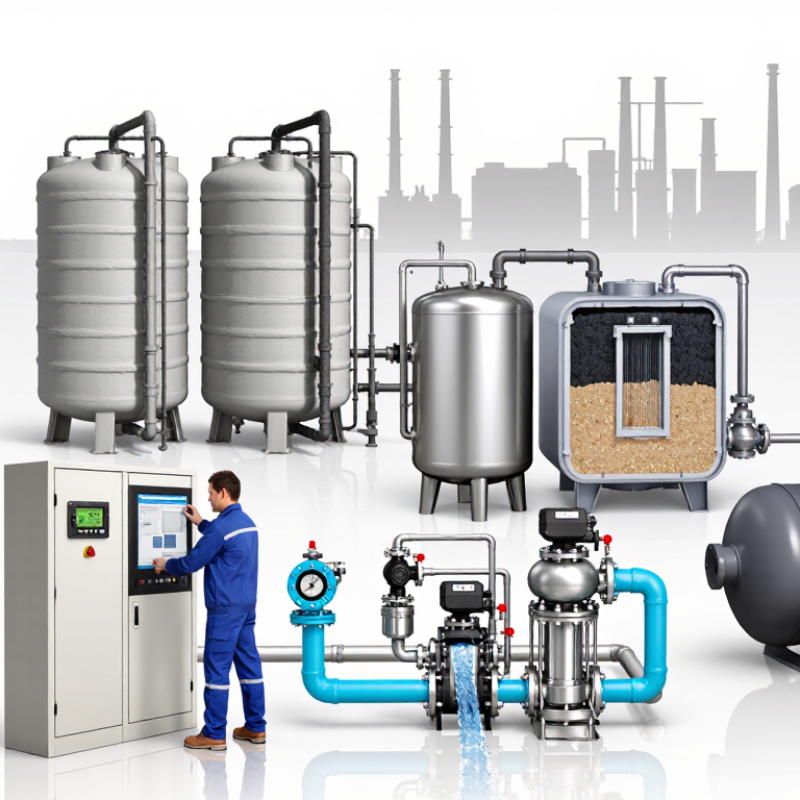
What Is the Best Sand Filtration System from China?
The best sand filtration system is not defined by its country of origin. It is defined by stable performance at a filtration rate of 5–15 m/h. A practical system should maintain even water distribution across the vessel. It should also prevent channeling, excessive pressure loss, and premature turbidity breakthrough. During commissioning, operators should record inlet pressure, outlet pressure, flow, and turbidity samples. These details reveal more than a product brochure.
Media size matters greatly. Sand between 0.3 and 0.6 mm can provide effective particle capture when the bed depth and loading rate match the water quality. Rates near 5–8 m/h usually offer more contact time and steadier polishing. Rates from 10–15 m/h may reduce equipment size, but they demand stronger backwash control. Fine media can improve clarity. It can also clog faster.
Do not overlook the vessel internals. A poor collector system may create uneven flow, even with suitable sand. Ask for verified hydraulic test data, media specifications, backwash requirements, and replacement guidance. Check the actual operating rate, not only the advertised maximum. In field use, raw water often changes after rain, cleaning, or seasonal turnover. I would not call one design perfect. A system that performs well at 12 m/h in clear water may struggle at 6 m/h when suspended solids increase. Careful sizing still beats impressive claims.
Choosing the best Chinese sand filtration system starts with the water source, not the vessel shape. Pressure filters operate in sealed tanks, making them compact and suitable for factories, hotels, and packaged treatment rooms. They also support higher hydraulic loading, but pumps consume energy and internal inspection is less convenient. Gravity filters use open beds and lower pumping demand. They are easier to observe and backwash, although they need more floor space and careful protection from contamination.
Multimedia filters add layers such as anthracite, sand, and supporting gravel. The different grain sizes improve depth filtration and extend run time before backwashing. This design often handles changing turbidity better than single-media sand. Still, poor bed grading can cause channeling. That weakness is easy to miss during a quick factory inspection.
China’s GB 5749-2022 drinking-water standard sets finished-water turbidity at no more than 1 NTU. The WHO Guidelines for Drinking-water Quality also link low turbidity with more reliable disinfection, commonly recommending below 1 NTU. For pathogen control, the U.S. EPA’s Long Term 2 Enhanced Surface Water Treatment Rule assigns different log-removal credits to conventional and direct filtration. A filter’s brochure cannot replace pilot testing. Flow rate, media depth, backwash expansion, and raw-water temperature must be checked. In practice, a slightly larger gravity or multimedia unit may outperform a compact pressure model when operators have limited maintenance time. Cost estimates can mislead. Replacement media, valves, sludge handling, and electricity often decide the real five-year expense.
What Is the Best Sand Filtration System from China?
When sourcing a sand filtration system from China, verify every water-contact material, not only the filter sand. GB/T 17219 evaluates hygienic safety for equipment and materials used in drinking water systems. NSF/ANSI 61 examines contaminants that may leach into drinking water. They address similar concerns, but they are not interchangeable.
Request current test reports for the tank lining, seals, valves, distributor, gravel, and filtration media. Each report should identify the exact material, model, production batch, test method, and laboratory. Check whether the testing covers the intended water temperature and contact conditions. A report for one rubber compound may not cover a different seal supplied later.
Look closely.
In practical purchasing work, a polished certificate alone is not enough. I would compare report details with the supplier’s drawings and material declarations. Traceability matters when components change without clear notice. Ask for samples and inspect odor, surface finish, weld areas, and packaging before installation. These checks can reveal small inconsistencies, although they cannot replace accredited laboratory testing.
One weakness remains: translated documents may hide important limitations. Have a qualified reviewer confirm the standard edition, testing scope, and expiration status. The safest choice is a system with transparent records, consistent materials, and evidence that matches the actual equipment delivered.
| Generic System Configuration | Typical Treatment Use | Common Tank and Media Materials | Typical Design Flow Rate | Backwash Requirement | GB/T 17219 Verification Focus | NSF/ANSI 61 Verification Focus | Technical Assessment |
|---|---|---|---|---|---|---|---|
|
Pressure Multimedia Sand Filter Three-layer media bed using anthracite, silica sand and supporting gravel. |
Municipal or commercial drinking-water pretreatment, turbidity reduction and suspended-solids removal. | Fiberglass-reinforced plastic or coated carbon-steel vessel; graded silica sand, anthracite and gravel; internal distributor and underdrain. | Approximately 5–15 m³/h per m² of filter area, depending on media depth, water quality and operating design. | Required. A practical design commonly uses about 30–50 m/h backwash velocity for granular media, subject to media density and temperature. | Verify wetted tank lining, pipework, valves, seals, adhesives, lubricants and media-support components for contact with drinking water. | Obtain material or component documentation showing compliance for the intended drinking-water contact conditions, including extraction and formulation controls. |
Best overall option High capacity and good particle removal when the media bed, underdrain and backwash sequence are correctly designed. |
|
Single-Media Quartz Sand Filter One graded silica or quartz sand layer over a support layer. |
Removal of suspended solids and moderate turbidity in small commercial, irrigation or process-water applications. | FRP, stainless steel or internally coated steel vessel; washed and graded silica or quartz sand; gravel support layer. | Approximately 5–12 m³/h per m² of filter area, depending on influent solids and allowable head loss. | Required. Backwash performance must be matched to the actual grain size, bed depth and media expansion characteristics. | Confirm that the sand, gravel, vessel lining, gaskets and valve materials are suitable for potable-water contact and do not introduce harmful substances. | Confirm the media supplier’s test documentation and the compliance status of all non-metallic wetted parts. | Economical and simple, but it generally has lower dirt-holding capacity and less effective depth filtration than a properly designed multimedia bed. |
|
Slow Sand Filtration Unit Biological and physical filtration through a fine sand bed at a low filtration rate. |
Community or decentralized drinking-water treatment where land area and stable operation are available. | Concrete, stainless steel or approved polymer tank; fine sand, support gravel and a drainage layer. | Approximately 0.1–0.4 m³/h per m² of filter area. | Usually cleaned by scraping the schmutzdecke or surface layer rather than frequent hydraulic backwashing. | Verify the tank, coatings, sealants, drainage materials and any polymer components that contact treated water. | Verify potable-water contact compliance for the tank lining, sealants, drainage components and replacement materials. | Can provide strong microbial and turbidity reduction under controlled conditions, but it requires a large footprint and careful biological management. |
|
Open Gravity Sand Filter Atmospheric rectangular or circular filter with a manually or automatically controlled media bed. |
Waterworks and industrial pretreatment where gravity flow and accessible maintenance are preferred. | Reinforced concrete, stainless steel or lined steel basin; silica sand, anthracite and gravel support; open-channel launders. | Approximately 5–15 m³/h per m² of filter area for conventional rapid filtration. | Required for rapid filtration. Backwash water collection, air scour and wash troughs may be included. | Verify coatings, sealants, concrete additives, pipe materials, wash-water components and all parts below the normal water level. | NSF/ANSI 61 documentation is most relevant to coatings, sealants, liners, pipework and other materials that contact drinking water. | Suitable for larger installations, but construction quality, drainage design and protection from environmental contamination are critical. |
|
Cartridge-Integrated Sand Pretreatment Package Sand or multimedia filter followed by cartridge filtration. |
Pretreatment before ultrafiltration, reverse osmosis, UV disinfection or high-purity process equipment. | FRP or stainless-steel sand vessel; silica or multimedia bed; polypropylene cartridge housing and cartridges. | Sand stage commonly operates at approximately 5–15 m³/h per m²; cartridge flow depends on cartridge rating and manufacturer data. | Sand stage requires backwashing; cartridge stage normally requires replacement rather than backwashing. | Verify all wetted plastics, elastomers, coatings, filter media and adhesive materials, not only the pressure vessel. | Verify the potable-water contact status of the cartridge housing, cartridge media, end caps, seals and any plasticizers or processing aids. | Provides better downstream protection, but operating cost and maintenance frequency are higher because cartridges must be monitored and replaced. |
|
Stainless-Steel Pressure Sand Filter Compact pressure vessel with a sand or multimedia bed. |
Commercial buildings, food-service facilities, hotels and compact potable-water pretreatment systems. | Stainless steel pressure shell, commonly grades such as 304 or 316 depending on water chemistry; silica sand, anthracite and gravel. | Approximately 5–15 m³/h per m² of filter area; actual flow depends on vessel diameter and media depth. | Required. The control valve and underdrain must be sized to achieve adequate bed expansion without media loss. | Verify stainless-steel grade, weld passivation, internal coatings if present, elastomers, lubricants and all plastic components. | Metal selection alone is not sufficient; verify the complete wetted assembly, especially seals, valve bodies and internal distributors. | Durable and space-efficient, but it may cost more and requires careful control of chloride exposure and welding quality. |
|
FRP Pressure Sand Filter Lightweight composite vessel with manual or automatic valve control. |
Residential, light-commercial and small industrial water-treatment systems. | Fiberglass-reinforced polymer shell with a polymer liner; silica sand, multimedia bed and polymer or stainless-steel internals. | Approximately 5–12 m³/h per m² of filter area, subject to vessel rating and media design. | Required. The valve, riser tube and distributor must tolerate the specified backwash pressure and flow. | Verify resin, liner, internal fittings, seals and all wetted polymer parts for the intended water-contact application. | Request evidence covering the complete wetted assembly; a certification for one component does not automatically cover the finished system. | Lightweight and corrosion-resistant, but material traceability and complete wetted-component documentation are particularly important. |
The best sand filtration system is not selected by vessel size alone. Backwashing performance reveals more about its real design quality. For many sand beds, water backwash between 30 and 50 m/h can loosen trapped solids effectively. Air scour at 12–15 L/m²·s may improve cleaning before rinsing. However, these values depend on media density, grain size, bed depth, and water temperature. Measure it. Do not guess.
During factory evaluation, request hydraulic test records and observe the backwash sequence. Check whether air reaches the entire bed evenly, without dead zones or violent local bubbling. A clean-looking vessel can still hide poor distribution. Measure expansion, drain turbidity, rinse time, and final pressure loss. Nozzle spacing, internal supports, weld quality, and corrosion-resistant materials also deserve attention. I would not trust a system based only on a catalog flow rate.
Tips: Ask for a witnessed test using your proposed filter media. Confirm the 30–50 m/h water rate at actual operating temperature. Verify that the air system can maintain 12–15 L/m²·s across the full bed area. Record inlet and outlet pressure before and after washing. Small details matter. If the supplier cannot explain uneven air patterns or rising rinse turbidity, pause the purchase and request better evidence.
The strongest Chinese suppliers should be ranked by evidence, not catalogue claims. Head loss is the first practical test. Measure pressure before and after the vessel at the stated flow rate. A rising differential pressure means poorer hydraulic performance or overdue backwashing. WHO guidance commonly places rapid filtration rates around 5–15 m³/m²/h, depending on water quality and media design. At the same flow, the supplier with lower initial head loss deserves a higher rank. However, this comparison is incomplete without testing after repeated backwash cycles.
Testing quality separates experienced manufacturers from trading companies. Request independent results for turbidity removal, media grading, vessel pressure resistance, and leakage. EN 12904 provides useful requirements for silica sand used in water treatment. For potable applications, material-contact documentation should also align with recognized health standards, such as NSF/ANSI 61 or equivalent local requirements. A practical ranking might assign 35% to head loss, 30% to verified testing, 20% to warranty coverage, and 15% to lifecycle cost. I would not trust a warranty promising “lifetime” service without written exclusions, response times, and replacement-part pricing. That wording is often too vague.
Tips: Ask for a three-year cost sheet. Include media replacement, electricity, backwash water, labor, freight, and valve maintenance. The cheapest vessel may consume more water every week. Request a factory video test, but treat video evidence as supporting proof, not final proof. An on-site acceptance test remains more reliable. My ranking would stay provisional until operating data arrives from a comparable installation.
Judge stable performance, not country of origin. A suitable system operates around 5–15 m/h. It should distribute water evenly and limit channeling. A brochure is not proof.
Sand between 0.3 and 0.6 mm can capture particles effectively. The correct size depends on bed depth and water quality. Fine media may improve clarity. It can clog faster.
Rates near 5–8 m/h usually provide longer contact time. Rates from 10–15 m/h can reduce equipment size. They also require stronger backwash control. Smaller is not always better.
Select the design according to the water source and maintenance conditions. Pressure filters save floor space but require pumping energy. Gravity filters are easier to observe and inspect. Multimedia beds often handle changing turbidity better. The answer is not automatic.
Record inlet pressure, outlet pressure, flow, and turbidity samples. Compare readings before and after backwashing. These records reveal channeling and pressure loss. They also expose unstable performance.
Water backwash commonly falls between 30 and 50 m/h. Air scour may use 12–15 L/m²·s. Actual values depend on temperature, media density, and bed depth. Measure expansion and rinse turbidity. Do not guess.
Observe whether water and air reach the entire bed evenly. Look for dead zones or violent local bubbling. Inspect collector spacing, supports, welds, and corrosion-resistant materials. Uneven flow can remain hidden during a quick inspection.
Request hydraulic test records and verified media specifications. Ask for backwash requirements and replacement guidance. A witnessed test using proposed media is useful. Check actual operating rates, not advertised maximums. I would still remain cautious.
Choosing the best Sand Filtration system from China requires more than comparing prices or tank size. A practical evaluation should begin with a filtration rate of 5–15 m/h and suitable media, typically graded between 0.3 and 0.6 mm. Buyers should compare pressure, gravity, and multimedia designs according to water quality, flow requirements, installation conditions, and maintenance capacity. Material safety is also essential, so tanks, coatings, seals, and internal components should be checked against GB/T 17219 and NSF/ANSI 61 requirements where applicable.
A reliable system should provide effective backwashing, using approximately 30–50 m/h of water and 12–15 L/m²·s of air when air scour is included. Supplier selection should consider clean-water head loss, independently documented testing, warranty terms, spare-parts support, and total lifecycle cost rather than initial purchase price alone. The strongest option is one that maintains stable filtration performance, resists corrosion, simplifies inspection, and delivers predictable operating expenses over long-term service.

BS Water