China Best Wastewater Purification Equipment Suppliers

Time:2026-09-21 Author:Ethan
0%

China Best Wastewater Purification Equipment Suppliers deserve careful evaluation, not simple ranking. Waste Water Purification now supports industrial production, municipal resilience, and safer water reuse. However, equipment performance depends on design conditions, operator training, and maintenance discipline.

The United Nations World Water Development Report 2017 estimated that more than 80% of global wastewater was discharged without treatment. The WHO and UNICEF Joint Monitoring Programme reported that 3.5 billion people lacked safely managed sanitation in 2022. These figures reveal a persistent infrastructure gap. They also explain the growing demand for reliable Chinese suppliers, including manufacturers of membrane systems, dissolved air flotation units, biological reactors, sludge dewatering machines, and ultraviolet disinfection equipment.

Performance matters more than catalogue language.

George Tchobanoglous, a leading wastewater-treatment engineer, wrote, “The goal of wastewater treatment is to produce an effluent that can be discharged without causing harm to the environment.” This principle appears in Wastewater Engineering: Treatment and Resource Recovery, published by McGraw Hill. It remains practical beside a real clarifier, where cloudy inflow, rising sludge, and unstable pH can quickly expose weak engineering.

This guide reviews China’s best Wastewater Purification equipment suppliers through measurable criteria. These include treatment capacity, removal efficiency, material quality, certification, project experience, after-sales support, and lifecycle cost. Supplier claims still require verification. No manufacturer is perfect. Site conditions can defeat even excellent equipment. That uncomfortable point deserves attention. Reliable purchasing begins with wastewater testing, transparent specifications, and evidence from comparable installations.
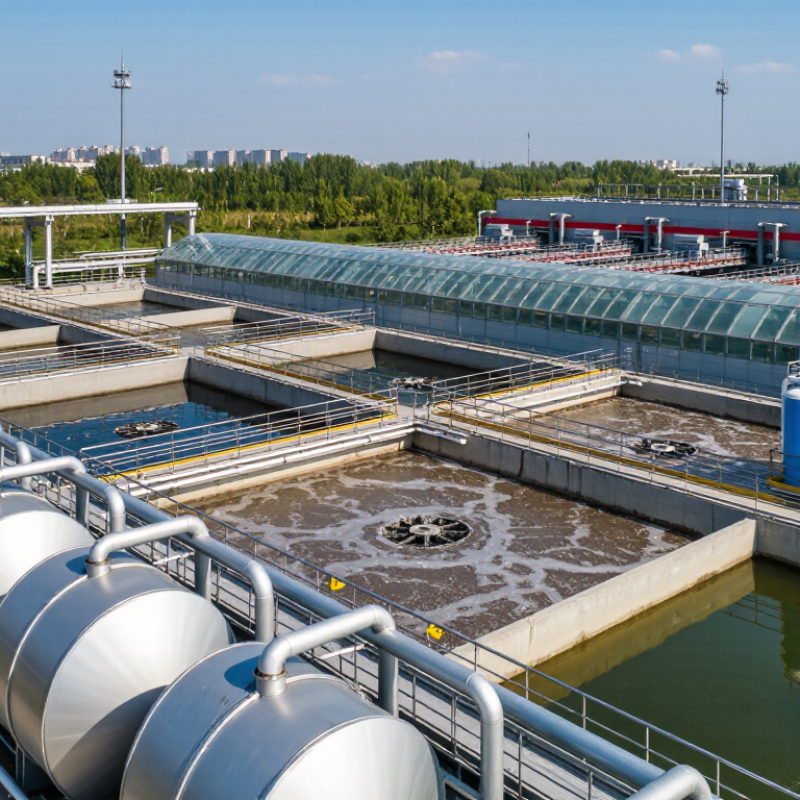
China Best Wastewater Purification Equipment Suppliers

Wastewater Purification Equipment in China: Scope and 2024 Market Context

China Best Wastewater Purification Equipment Suppliers

Wastewater purification equipment in China covers municipal plants, food processing, chemical production, mining, and textile operations. In the 2024 market, buyers increasingly sought modular systems, lower energy use, and clearer monitoring data. Common solutions include dissolved air flotation, membrane bioreactors, ultrafiltration, reverse osmosis, and sludge dewatering units. Each process fits a different pollutant profile.

Practical selection begins with testing the actual wastewater. COD, BOD, suspended solids, salinity, oil, and heavy metals can change equipment requirements. A reliable supplier should provide flow calculations, process drawings, installation guidance, and commissioning support. Site experience matters. Stainless steel quality, membrane cleaning access, pump redundancy, and sensor calibration deserve close inspection. Some specifications look impressive on paper but perform poorly when influent quality changes. That is an uncomfortable gap buyers should examine.

Tips: Request a small pilot test before signing a large contract. Compare treated-water results, power consumption, chemical dosing, and maintenance hours. Check whether spare parts are locally available. Ask for recent project references with similar wastewater, not merely similar equipment. Also review compliance documentation and operator training plans. A low purchase price may become expensive after repeated membrane fouling or unstable biological treatment. Metric-based contracts can reduce uncertainty, although they require careful wording and honest baseline data.

Chinese Discharge Standards: GB 18918-2002 and Class 1A Limits

China Best Wastewater Purification Equipment Suppliers

GB 18918-2002 remains a practical reference for municipal wastewater treatment in China. Its Class 1A limits are demanding: COD should not exceed 50 mg/L, while BOD5 and suspended solids should stay below 10 mg/L. Ammonia nitrogen is limited to 5 mg/L under normal temperature conditions. The total nitrogen limit is 15 mg/L, and total phosphorus is 0.5 mg/L. Effluent pH must remain between 6 and 9. These figures should guide equipment selection, not merely appear in a sales document.

Reliable suppliers should explain how each process removes specific pollutants. Biological treatment handles organic matter and ammonia. Denitrification reduces total nitrogen. Chemical dosing or enhanced biological phosphorus removal may control phosphorus. Disinfection is also necessary when fecal coliform limits apply. Site conditions matter. A small aeration tank, uneven sludge return, or weak online monitoring can quickly affect compliance. Operators should request pilot data, maintenance records, energy estimates, and verified outlet testing.

Numbers can look perfect on paper. Reality is less tidy. Seasonal temperature changes may increase ammonia risk, especially during winter operation. Influent shock loads can also disturb biological systems. Suppliers that discuss these weaknesses deserve closer attention. The most useful proposal includes sampling points, alarm settings, spare-part plans, and clear responsibility for commissioning. Class 1A performance needs stable operation, not only advanced equipment.

Treatment Technologies: COD, BOD₅, and TSS Removal Above 90%

China’s wastewater purification equipment suppliers increasingly design treatment trains for COD, BOD₅, and TSS removal above 90%. UN-Water’s World Water Development Report 2017 estimated that more than 80% of global wastewater enters the environment without adequate treatment. This highlights the need for measurable performance, not attractive equipment photographs.

A practical system may combine screening, equalization, biological treatment, clarification, and tertiary filtration. MBBR or activated sludge reduces biodegradable BOD₅. Coagulation, sedimentation, and filtration target suspended solids. MBR systems can provide stronger solids separation and stable effluent quality. Under suitable loading, temperature, and maintenance conditions, these combinations can exceed 90% removal for COD, BOD₅, and TSS.

Conditions matter greatly. The U.S. EPA secondary-treatment framework uses 30 mg/L as a reference limit for BOD₅ and TSS, with 85% minimum removal. China’s GB 18918-2002 Class 1A limits include 50 mg/L COD, 10 mg/L BOD₅, and 10 mg/L suspended solids. These figures help buyers compare supplier claims. A catalogue number is not evidence. Request influent data, pilot-test results, hydraulic retention time, sludge production, and energy consumption. Online sensors should track turbidity, dissolved oxygen, and flow. Even experienced operators face seasonal changes and unexpected industrial loads. That is where many “over 90%” promises become less certain.

China Best Wastewater Purification Equipment Suppliers - Treatment Technologies: COD, BOD₅, and TSS Removal Above 90%
Treatment Configuration Primary Application Typical Hydraulic Retention Time COD Removal BOD₅ Removal TSS Removal Key Design Considerations
MBR
(Membrane Bioreactor)
Municipal, industrial, and water-reuse applications 4–8 hours 90–98% 95–99% 99–99.9% Produces high-quality effluent; requires membrane fouling control, aeration, and periodic cleaning.
SBR
(Sequencing Batch Reactor)
Municipal and variable-flow industrial wastewater 6–12 hours 85–95% 95–99% 90–98% Uses timed fill-and-draw cycles; suitable for nutrient removal and sites with fluctuating flow.
MBBR
(Moving Bed Biofilm Reactor)
Compact biological treatment and capacity upgrades 3–8 hours 85–95% 90–98% 90–96% Uses suspended biofilm carriers; offers high biological surface area and good resistance to load variation.
Conventional Activated Sludge Municipal wastewater with relatively stable loading 6–10 hours 85–95% 90–98% 90–97% Well-established process; requires secondary clarification, sludge recycling, and careful oxygen control.
DAF + Biological Treatment Food, beverage, chemical, and oily industrial wastewater 4–10 hours 90–97% 90–98% 95–99% Dissolved air flotation removes fats, oils, grease, and suspended solids before biological polishing.
UASB + Aerobic Polishing High-strength biodegradable wastewater 8–24 hours 90–97% 95–99% 90–96% Anaerobic treatment reduces organic load and energy demand; aerobic polishing improves final effluent quality.
Coagulation–Sedimentation + Filtration Industrial wastewater requiring enhanced solids and colloid removal 1–4 hours 70–95% 75–95% 90–99% Chemical dosing and filter selection depend on wastewater chemistry, particle size, and target discharge limits.
Biological Treatment + Tertiary Filtration Discharge compliance and non-potable water reuse 6–14 hours 90–98% 95–99% 98–99.9% Combines biological oxidation with polishing filtration; UV or chlorination may be added for disinfection.
Reference note: The removal efficiencies shown are representative engineering ranges for properly designed and operated systems. Actual performance depends on influent concentration, biodegradability, temperature, hydraulic loading, chemical dosing, sludge management, and applicable discharge standards. COD = Chemical Oxygen Demand; BOD₅ = five-day Biochemical Oxygen Demand; TSS = Total Suspended Solids.

Supplier Categories: MBR, DAF, RO, and Capacities up to 100,000 m³/day

China Best Wastewater Purification Equipment Suppliers

China’s wastewater equipment market covers MBR, DAF, RO, and modular systems. These technologies serve very different treatment problems.

MBR MBR systems combine biological treatment and membrane filtration. They suit sites needing compact footprints and stable effluent quality.

DAF DAF units remove oils, grease, algae, and suspended solids through dissolved air flotation.

RO RO targets dissolved salts and reuse applications, but it requires careful pretreatment.

Large suppliers may design plants from small packages to 100,000 m³/day. That range demands more than catalogue capacity. The 2024 UN World Water Development Report links water stress with rising demand and uneven infrastructure. The UNESCO World Water Development Report 2017 also reported that over 80% of global wastewater was discharged without treatment. These figures support stronger treatment investment, but local influent data remains decisive. A 100,000 m³/day design can fail if peak flows, sludge quality, or salinity are underestimated. Reality is less tidy.

Tips: Request two years of operating data, not only laboratory results. Check membrane flux, chemical use, energy consumption, sludge yield, and downtime. For DAF, ask for pilot testing with actual wastewater. For RO, verify recovery rate and concentrate-management plans. EN 12255, ISO 9001, and documented factory acceptance testing can improve supplier reliability. Still, certificates do not replace site supervision. MBR fouling remains a practical risk. RO energy costs can also reshape the business case. A careful supplier should explain these weaknesses openly.

Supplier Evaluation: ISO 9001, CE Certification, and Energy Below 0.5 kWh/m³

Choosing China’s best wastewater purification equipment suppliers requires more than comparing prices. ISO 9001 certification shows that documented quality procedures exist, but buyers should verify its scope and validity. A certificate alone cannot prove reliable daily operation.

CE certification matters when the equipment enters markets requiring European conformity. Ask for the Declaration of Conformity, technical files, and applicable test records. Inspectors should also check electrical cabinets, emergency stops, materials, and labeling. Small details matter.

Energy performance deserves careful measurement. A credible supplier should state consumption below 0.5 kWh/m³ under defined flow, pollutant load, temperature, and discharge conditions. Request operating data from comparable installations. Check whether aeration, pumps, sludge handling, and pretreatment are included. Otherwise, the number may look attractive but mislead. Site visits can reveal vibration, odor control, maintenance access, and actual meter readings. We have seen estimates change after seasonal loading increased. That weakness should be admitted, not hidden. Independent commissioning tests improve confidence, although they add time and cost. Ask about spare parts, operator training, response times, and warranty exclusions before signing. A technically strong supplier welcomes these questions and provides traceable records rather than broad promises.

FAQS

What are the key Class 1A wastewater limits?

COD should remain at or below 50 mg/L. BOD5 and suspended solids should stay below 10 mg/L. Ammonia nitrogen is limited to 5 mg/L under normal temperatures. Total nitrogen is 15 mg/L, and total phosphorus is 0.5 mg/L. Effluent pH should remain between 6 and 9.

Which treatment processes remove the main pollutants?

Biological treatment reduces organic matter and ammonia. Denitrification targets total nitrogen. Phosphorus may require chemical dosing or enhanced biological removal. Disinfection may be needed when fecal coliform limits apply.

Does advanced equipment guarantee compliant effluent?

No. A small aeration tank can weaken biological performance. Uneven sludge return may also disturb treatment. Equipment matters, but stable operation matters more.

What information should a supplier provide?

Request pilot data, maintenance records, energy estimates, and verified outlet tests. Ask for sampling points and alarm settings. Spare-part plans should be clear. Responsibility during commissioning must be written down.

How can seasonal changes affect treatment?

Winter temperatures can increase ammonia risks. Biological systems usually respond more slowly in colder conditions. Influent shock loads can also cause sudden instability. A perfect spreadsheet is not enough.

When are MBR, DAF, and RO systems suitable?

MBR combines biological treatment with membrane filtration. It suits compact sites needing stable effluent quality. DAF removes oils, grease, algae, and suspended solids. RO removes dissolved salts and supports reuse, but needs strong pretreatment.

What should buyers check for a large treatment capacity?

Catalogue capacity is not enough. Review peak flow, sludge quality, salinity, and influent changes. A large design may fail when real conditions are underestimated. Site data should guide the design.

What operating data should be reviewed before purchasing?

Ask for two years of operating records, not only laboratory results. Check membrane flux, chemical use, energy consumption, sludge production, and downtime. For DAF, request testing with actual wastewater. For RO, verify recovery and concentrate management. Some data may still be incomplete. That deserves questions.

Conclusion

Waste Water Purification equipment in China serves a broad range of municipal, industrial, and commercial applications, with the 2024 market emphasizing efficient, modular, and intelligent treatment systems. Equipment selection should consider the applicable requirements of GB 18918-2002, especially Class 1A discharge limits for treated wastewater. Modern solutions are designed to achieve more than 90% removal of COD, BOD₅, and TSS through combinations of biological treatment, membrane filtration, dissolved air flotation, and advanced purification processes.

The supplier landscape includes manufacturers specializing in MBR systems, DAF units, reverse osmosis equipment, and complete treatment plants with capacities reaching up to 100,000 m³ per day. When evaluating suppliers, buyers should review ISO 9001 quality management certification, CE certification where applicable, system reliability, maintenance support, customization capabilities, and operating efficiency. Energy consumption below 0.5 kWh/m³ can also be an important benchmark for reducing long-term operating costs while maintaining stable treatment performance.

Ethan

Ethan

Ethan is a seasoned marketing professional with a deep expertise in our company's innovative product line. With a passion for sharing knowledge and insights, he takes the lead in regularly updating our corporate blog, where he explores industry trends, product features, and effective marketing......