Choosing reliable water bottle manufacturers in China can shape product quality, safety, and customer trust. This guide explores how leading suppliers help consumers Keep Hydrated through practical, well-tested designs. It also looks beyond attractive catalog photos and low quotation prices.
Experienced buyers usually inspect materials, production controls, and testing records before placing an order. Stainless steel bottles should resist corrosion and preserve temperature during daily use. Tritan and other food-contact plastics need clear material documentation. Lids deserve equal attention, especially around silicone seals, hinges, and threads. A bottle that leaks inside a work bag quickly becomes a costly mistake.
Small details matter.
Professional manufacturers often support OEM development, sample testing, packaging design, and quality inspections. Their reliability should appear in documented processes, not only in confident sales language. Buyers can request factory evidence, product specifications, test reports, and independent inspections where appropriate. Certifications may vary by target market, so requirements should be checked before production begins.
This article compares China’s top water bottle manufacturers through practical criteria, including manufacturing experience, customization ability, material transparency, quality assurance, and communication. Some suppliers may excel at mass production but struggle with complex finishes. Others may offer excellent prototypes yet lack stable delivery capacity. That difference is easy to miss.
No supplier is perfect.
A careful evaluation reduces surprises and supports safer, more durable hydration products. The strongest partnership usually develops through clear samples, realistic timelines, written standards, and honest revisions.
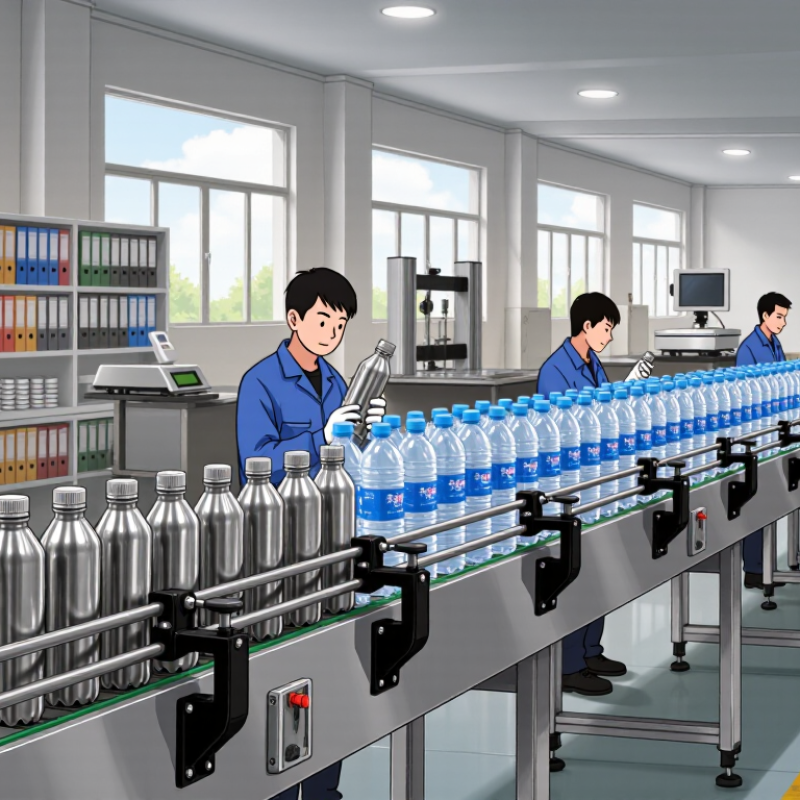
China’s water bottle manufacturing sector includes several distinct supplier types. OEM factories produce bottles to a buyer’s drawings, colors, and packaging requirements. ODM manufacturers offer ready-developed shapes that can be adjusted quickly. This option often suits buyers testing a new market. Some factories specialize in stainless steel vacuum bottles. Others focus on Tritan, PP, glass, or sports bottles. The material changes cost, weight, durability, and cleaning needs. Choose carefully.
Large integrated manufacturers usually manage molding, printing, assembly, and quality inspection under one roof. This can improve traceability and reduce communication delays. Specialist factories may outsource parts, such as lids or silicone seals. That arrangement is not automatically poor, but it needs tighter inspection. From practical sourcing experience, sample checks should include leak testing, thread fit, odor, surface scratches, and insulation performance. Ask for production records and material documentation. Do not rely on polished samples alone.
Trading companies are another common supplier type. They can compare factories and coordinate shipping, but their technical control may be limited. A direct factory relationship can provide clearer production feedback and faster problem solving. Yet smaller factories may struggle with sudden large orders. I have seen attractive quotations hide weak packaging or inconsistent lid dimensions. That risk is easy to underestimate. Request a pilot order, confirm tolerances, and review defect rates before scaling. Reliable manufacturers explain limitations instead of promising everything.
Material selection shapes every water bottle long before filling and shipping. Common options include food-contact stainless steel, aluminum, polypropylene, and polyethylene terephthalate. Each has trade-offs. Stainless steel supports deep drawing, welding, polishing, and vacuum insulation. Aluminum usually requires impact-resistant inner coatings. Polypropylene suits injection molding and repeated cap production. According to the OECD’s Global Plastics Outlook, global plastic waste reached 353 million tonnes in 2019. This figure makes material efficiency and recycled content important production questions.
Manufacturers typically begin with sheet forming, tube extrusion, or injection molding. Deep-drawn steel bodies need controlled pressure to prevent wrinkles and uneven walls. Welded seams require visual inspection, dimensional checks, and leak testing. Vacuum models add air removal between double walls, followed by sealing. The U.S. Department of Energy reports that recycled aluminum uses about 95% less energy than primary aluminum production. That advantage depends on clean scrap collection and stable sorting systems.
A reliable factory should document resin grades, coating performance, and batch traceability. It should also test odor, migration, pressure resistance, and repeated-cap cycles. ISO 22000 principles can strengthen hygiene controls, although certification alone does not guarantee a flawless bottle. One practical concern remains: glossy finishes can hide scratches and coating defects. Buyers should request production samples, test reports, and inspection records before approving large volumes.
Choosing among China’s top water bottle manufacturers requires more than comparing prices or polished product photos. Quality begins with material verification. Ask for the stainless steel grade, plastic composition, and food-contact test reports. For plastic bottles, check BPA-free declarations and migration testing. For metal bottles, inspect welds, thread accuracy, and interior coatings. A sharp rim or uneven seam is a warning sign.
Safety depends on both testing and production control. Request reports from an independent laboratory, not only internal inspection sheets. Confirm that tests match the bottle’s intended use, temperature range, and target market. Certifications should be traceable, current, and issued to the correct factory or product. ISO 9001 can show quality-management practices, but it does not prove drinking-water safety. During sample checks, fill the bottle with warm water and examine odors, leaks, cap movement, and coating changes. A glossy finish can mislead me.
Tips: Request a pre-production sample. Compare it with the final batch. Check factory addresses, batch records, and material certificates. Ask how rejected products are handled. If a supplier avoids clear answers, pause the order. My own mistake was trusting a certificate without checking its scope. That small detail mattered. Also review cleaning instructions, replacement seals, and warranty terms. Reliable manufacturers welcome reasonable questions and provide consistent evidence, not vague promises.
| Evaluation Dimension | What to Check | Commonly Accepted Requirement or Reference | Practical Verification Method |
|---|---|---|---|
| Primary Bottle Material | Material grade, composition, intended food-contact use, and resistance to cracking or corrosion. | Food-contact stainless steel is commonly specified as 18/8 or 18/10 stainless steel; plastics should have a clearly identified resin type such as PP or Tritan-type copolyester. | Request the material specification, supplier declaration, and an independent material or composition test report. |
| Food-Contact Safety | Overall migration, specific migration, heavy metals, colorants, and other substances that may transfer into beverages. | For the United States, applicable FDA food-contact requirements may apply. For the European Union, Regulation (EC) No. 1935/2004 and relevant material-specific rules should be considered. | Check that reports identify the exact product, material, test conditions, laboratory, test date, and applicable regulation. |
| BPA and Restricted Substances | BPA status, plastic additives, phthalates, lead, cadmium, and other restricted substances. | A “BPA-free” claim should be supported by testing; EU buyers may also request REACH-related substance information and applicable restricted-substance testing. | Compare the declaration with a laboratory report and confirm that the tested component includes the lid, gasket, coating, and drinking spout. |
| Leak Resistance | Thread accuracy, gasket compression, lid fit, valve design, and leakage after repeated opening and closing. | The buyer should define a leak-test pressure, duration, orientation, and number of opening-and-closing cycles in the purchase specification. | Perform an upright and inverted leak test, followed by a side-storage test; inspect the seal after repeated use. |
| Thermal Performance | Insulation structure, temperature retention, condensation control, and suitability for hot or cold beverages. | Vacuum-insulated bottles generally require a defined test protocol because retention depends on fill volume, starting temperature, ambient conditions, and test duration. | Use a calibrated thermometer and record starting temperature, ambient temperature, fill level, and temperature at fixed intervals. |
| Durability and Surface Finish | Dent resistance, coating adhesion, scratch resistance, weld quality, sharp edges, and deformation after impact. | Acceptance limits should be agreed before production; painted or powder-coated surfaces should pass the buyer’s specified adhesion and abrasion tests. | Inspect samples under bright light and conduct controlled drop, coating adhesion, and repeated-wash tests using documented criteria. |
| Cleaning and Hygiene | Removable seals, hidden cavities, odor retention, microbial-cleaning considerations, and dishwasher suitability. | A dishwasher-safe claim should specify which components and dishwasher conditions are covered; all beverage-contact surfaces should be accessible for cleaning. | Disassemble the product, clean it according to the instructions, inspect difficult-to-reach areas, and check for odor or deformation after repeated cycles. |
| Lid, Gasket, and Component Safety | Seal material, component fit, choking hazards, spring or valve reliability, and compatibility between dissimilar materials. | Every beverage-contact component should be included in the food-contact documentation, not only the bottle body. | Request a component list and verify that each gasket, straw, coating, adhesive, and plastic part is covered by the supporting documents. |
| Manufacturing Quality System | Incoming inspection, process controls, traceability, calibration, nonconformance handling, and final inspection. | ISO 9001 certification indicates a quality-management system, but it does not by itself prove that a specific bottle is food-contact safe. | Review the certificate scope and validity, audit the production process, and request batch records and inspection plans. |
| Laboratory Test Reliability | Laboratory competence, sample identity, test method, accreditation status, and report traceability. | ISO/IEC 17025 accreditation is a recognized benchmark for laboratory competence; the scope must cover the relevant test method. | Verify the laboratory accreditation, report number, test scope, sample description, and whether the report is current and applicable. |
| Factory and Product Audit | Production capacity, equipment, worker procedures, storage conditions, quality records, and consistency between samples and mass production. | An independent factory audit and pre-shipment inspection reduce the risk of unauthorized material or process changes. | Use a written inspection checklist covering appearance, dimensions, weight, leakage, packaging, labeling, and random sampling. |
| Documentation and Traceability | Product drawings, bill of materials, certificates, test reports, batch codes, packaging labels, and change-control records. | Documents should match the final production version and identify the responsible manufacturer, product model, materials, and revision date. | Compare approved samples, technical files, labels, certificates, and shipment records before placing a repeat order. |
Customization, minimum orders, and export support often separate reliable manufacturers from ordinary suppliers. Grand View Research valued the global reusable water bottle market at about USD 8.7 billion in 2023. This growth increases pressure on factories to offer flexible designs and consistent quality. Buyers should request material options, lid drawings, logo methods, and sample approval before placing bulk orders. Stainless steel, Tritan, and food-grade polypropylene require different testing procedures.
Minimum order quantities vary by decoration and tooling. A printed bottle may require 500 units, while a custom mold can require several thousand. A low MOQ sounds attractive. However, the unit price may rise sharply. Ask for a complete quotation, including sampling, mold fees, packaging, inspection, and shipping terms. Research and Markets forecasts continued expansion in the reusable bottle sector through the decade, making export readiness increasingly important. Reliable suppliers should provide material declarations, leak-test records, carton specifications, and support for destination-market requirements.
Tips: Start with a paid sample. Confirm the exact color under daylight. Check the cap after repeated opening. Request production photos and an independent inspection before shipment. Export service should include clear Incoterms, commercial invoices, packing lists, and accurate HS-code guidance. Do not assume every certificate is current. Recheck dates, test scope, and factory details. Small oversights can delay a container.
China’s water bottle manufacturing base is broad, but the lowest quotation rarely tells the full story. The OECD Global Plastics Outlook reports that only 9% of global plastic waste was recycled in 2019. This makes material selection and recovery planning important purchasing questions. Ask whether the supplier uses food-contact stainless steel, verified plastics, or recycled content with traceable documentation.
A reliable Chinese water bottle manufacturer should provide factory audit records, batch traceability, and independent migration-test reports. Check testing against the destination market’s requirements, not only the supplier’s internal checklist. Request samples before approving mass production. Test the lid seal, thread strength, coating adhesion, odor, and drop resistance. Small defects become expensive after shipment.
The reusable bottle market is expanding. Grand View Research identifies continued growth through 2030, driven by sustainability concerns and portable hydration. That growth can attract inexperienced factories. Look beyond polished catalogs. Review production capacity, quality-control staffing, mold ownership, minimum order quantities, and realistic lead times. A cheaper factory may outsource critical steps without clear disclosure. That risk is easy to miss. I would also inspect packaging waste and corrective-action records, even when the supplier seems cooperative. A perfect manufacturer does not exist; transparent responses to problems matter more than perfect sales claims.
Common materials include food-contact stainless steel, aluminum, polypropylene, and polyethylene terephthalate. Each material has different costs, forming methods, durability, and recycling considerations.
Factories may deep-draw steel sheets or form metal tubes. Controlled pressure helps prevent wrinkles and uneven walls. Welded seams need visual checks, measurements, and leak testing.
Insulated bottles usually have two walls with air removed between them. The factory then seals the space. Check insulation performance, sealing quality, dents, and condensation.
Request material certificates, food-contact reports, and independent laboratory results. Testing should match the intended temperature range and destination market. A certificate alone proves little.
Fill the bottle with warm water and check odor, leakage, and cap movement. Inspect the rim, threads, welds, coating, and gasket. Try a careful drop test. Small checks matter.
No. A quality-management certificate does not automatically prove drinking-water safety. Confirm its validity, scope, factory address, and covered product. I once trusted a certificate too quickly.
Review factory audit records, production capacity, mold ownership, and quality-control staffing. Ask about minimum quantities, lead times, rejected products, and corrective actions. Cheap quotes can hide outsourced steps.
Request batch records, material certificates, inspection reports, and production samples. Ask for coating tests, migration results, and leak-test records. Clear evidence beats polished photos.
Recycled materials need clean collection, stable sorting, and traceable documentation. Poor sorting can affect appearance, strength, or food-contact suitability. Numbers can look impressive.
Review cleaning instructions, replacement seals, packaging waste, and warranty terms. Compare the approved sample with the final batch. Small differences become expensive after shipment.
China offers a wide range of water bottle manufacturers, from large-scale factories producing stainless steel, plastic, glass, and silicone bottles to specialized suppliers focused on insulated, sports, travel, or promotional designs. Their manufacturing processes may include molding, stamping, welding, polishing, coating, printing, and assembly. Understanding the materials and production methods helps buyers compare durability, insulation performance, appearance, and cost.
To select a reliable supplier, buyers should review product quality controls, material safety documentation, testing procedures, and relevant certifications for their target markets. It is also important to confirm customization options, sample policies, minimum order quantities, packaging, lead times, communication, and export support. A suitable manufacturer should provide consistent quality, transparent pricing, responsive service, and practical solutions for design and logistics. By carefully evaluating these factors, businesses can build a dependable supply chain and offer customers safe, attractive bottles that help them Keep Hydrated.

BS Water