Access to drinkable water remains a critical global challenge. According to the UN, 2 billion people lack safe drinking water. This scarcity underscores the importance of effective sourcing strategies. Factors such as climate change and population growth contribute to water shortages.
Moreover, the World Health Organization states that one in three people around the world do not have access to safe drinking water. This reality demands innovative approaches. Communities must adapt and find sustainable solutions. Harvesting rainwater and creating filtration systems are some effective methods. Yet, these practices often require expertise.
While progress is being made, the journey to securing drinkable water is fraught with obstacles. Technical knowledge and careful planning are essential. It is crucial to monitor local water sources regularly. Communities must remain vigilant about contamination risks. Addressing these concerns can lead to reliable water supplies.
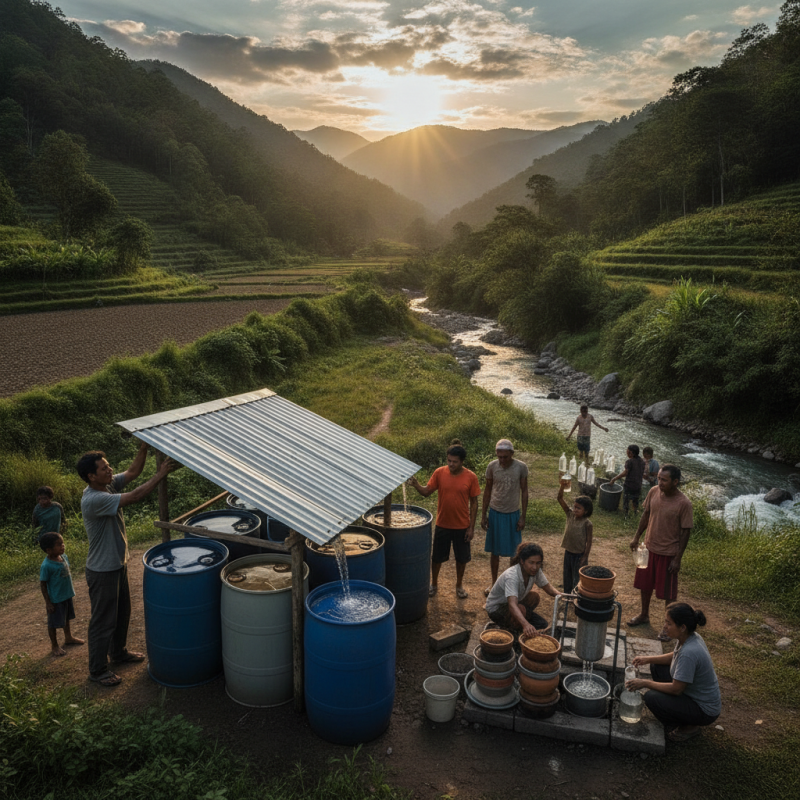
Water scarcity affects billions globally. It has far-reaching impacts on how communities access this vital resource. Many regions struggle with inadequate infrastructure. This leads to unequal access to clean water. Urban areas often experience better services, while rural communities lag behind.
Human activities play a significant role in water scarcity. Pollution from agriculture and industry further complicates sourcing drinkable water. Climate change exacerbates these issues, causing irregular rainfall patterns. In some areas, water sources dry up entirely. These challenges disrupt daily life and health.
Sourcing drinkable water requires innovative approaches. Communities must prioritize sustainable practices. Local solutions, like rainwater harvesting, are essential. Education on water conservation can empower individuals. Whenever possible, collaboration among stakeholders is crucial. Reflection on current methods is necessary to adapt and improve. Water access should not be a privilege but a basic right for everyone.
| Region | Water Scarcity Level | Sources of Drinkable Water | Top Challenges | Sourcing Strategies |
|---|---|---|---|---|
| Sub-Saharan Africa | Severe Scarcity | Groundwater, Rainwater Harvesting | Infrastructure, Climate Change | Community Projects, Solar-Powered Systems |
| Middle East | Extreme Scarcity | Desalination, Aquifers | High Costs, Political Issues | Efficiency Improvements, International Cooperation |
| South Asia | Moderate Scarcity | River Water, Wells | Pollution, Over-extraction | Regulation, Water Quality Monitoring |
| North America | Low Scarcity | Surface Water, Groundwater | Contamination, Aging Infrastructure | Investment in Infrastructure, Technological Solutions |
| Australia | Moderate Scarcity | Rainwater, Reuse | Drought, Water Rights Conflicts | Sustainable Practices, Policy Reform |
Accessing safe and sustainable sources of drinkable water is essential for public health. According to the World Health Organization, over 2 billion people lack access to safely managed drinking water. This is alarming, as contaminated water leads to diseases like cholera and dysentery, affecting communities profoundly.
Identifying sustainable sources starts with assessing local water quality. Regular testing for pollutants is crucial. Recent studies show that well water is less likely to be contaminated compared to surface water, but it requires proper maintenance. Monitoring water pH and microbial content can ensure safety. Awareness about natural filtration methods exists, yet many communities overlook these practical solutions.
Engaging local communities in water conservation efforts promotes sustainability. A report from the United Nations highlights that effective management of water resources can lead to improved resilience against climate change. However, challenges remain—many regions face insufficient investment in infrastructure. For individuals, rainwater harvesting offers an immediate alternative, yet it is often underutilized due to inadequate knowledge or skills. These reflections point toward a need for education on sustainable practices in water sourcing, emphasizing the importance of local solutions.
When sourcing drinkable water, assessing its quality is crucial. Various parameters must be considered, including pH levels, turbidity, and microbial content. According to the World Health Organization (WHO), ideal drinking water should have a pH range between 6.5 and 8.5. Deviations from this range can affect taste and safety. Regular testing using field kits can provide immediate feedback on these key parameters.
Turbidity is another important factor impacting water quality. Water with high turbidity can harbor pathogens, making it unsafe for consumption. A study published in the Journal of Water and Health found that turbidity greater than 1 NTU (Nephelometric Turbidity Units) significantly increases health risks. Microbial testing is also essential. Routine checks for E. coli and coliform bacteria are recommended by health authorities to ensure water safety.
It's also important to consider the geography of the water source. Pollution levels can vary significantly due to industrial activities or agricultural runoff. In some regions, seasonal changes also influence water quality. Therefore, it’s essential to adapt testing methods based on local conditions. Relying solely on previous data can lead to oversight. Regular, comprehensive assessments will offer a clearer picture of water quality and ensure its safety for consumption.
Accessing drinkable water remains a critical challenge. Innovative technologies in water purification and resource management offer promising solutions. According to a report by the World Health Organization, approximately 2 billion people lack access to safe drinking water. This statistic emphasizes the urgent need for effective purification methods.
One method gaining traction is membrane filtration. This technique removes contaminants through physical barriers. Studies indicate that membranes can filter particles down to 0.1 nanometers. As a result, harmful pathogens and chemicals are eliminated. However, challenges exist, such as membrane fouling, which can reduce efficiency over time. It's crucial to continuously monitor and maintain filtration systems to ensure optimal performance.
Another notable innovation is solar water disinfection. This technique utilizes UV radiation from sunlight to kill microorganisms in water. Data show that solar disinfection can reduce E. coli levels by over 99% in six hours. While promising, this method relies on sufficient sunlight and may not be practical in all regions.
To succeed in sourcing drinkable water, here are a few tips:
Engaging communities in water sourcing initiatives is crucial for success. This process should start with building trust. Organizers must actively involve local residents. Listening to their concerns creates a sense of ownership. It also empowers the community. When locals feel heard, they are more likely to participate.
Effective communication is vital. Use simple language to explain the sourcing process. Visual aids, like maps or diagrams, can clarify plans. Host workshops to discuss challenges and solutions. A healthy dialogue fosters collaboration and innovation. However, there may be resistance. Some may not trust external parties. Addressing these hesitations requires patience and transparency.
Community engagement is not one-size-fits-all. Each area has unique needs. Tailor strategies accordingly. Constantly seek feedback and adjust plans. This flexibility shows commitment to their welfare. Regular check-ins also build rapport. Remember, long-term relationships take time. Not every initiative will succeed, but each experience offers lessons worth reflecting upon.
: Safe drinking water is vital for public health. Contaminated water can cause serious diseases.
Regular testing for pollutants is essential. Monitoring pH and microbial content helps ensure safety.
Engaging local communities in conservation efforts boosts sustainability. Education on water management is crucial.
Membrane filtration removes contaminants through physical barriers. It can filter particles down to 0.1 nanometers.
Solar disinfection uses UV radiation from sunlight. It can significantly reduce harmful microorganisms in water.
Membrane fouling can reduce the effectiveness of filtration systems. Regular monitoring is essential for optimal performance.
Building trust starts with actively involving local residents. Listening to their concerns is key to ownership.
Clear communication fosters collaboration. Simple language and visual aids can enhance understanding and engagement.
Each area has unique needs. Strategies should be flexible and adjusted based on community feedback.
Reflect on experiences. Not every attempt will work, but each offers lessons for future projects.
The pursuit of drinkable water has become increasingly critical due to global water scarcity, which significantly impacts sourcing efforts. Understanding the consequences of this scarcity allows communities to identify safe and sustainable sources of water, ensuring access to this essential resource. Key parameters for assessing water quality, along with various testing methods, are vital to ensuring the safety of drinkable water.
Innovative technologies in water purification and resource management play a crucial role in enhancing the availability and quality of drinkable water. Additionally, fostering community engagement in water sourcing initiatives is essential for promoting sustainable practices and empowering local populations to take action. By integrating these approaches, we can improve the sourcing of drinkable water and address the challenges posed by water scarcity globally.

BS Water