Choosing a water purification system starts with a simple question: what is actually in your water? The WHO/UNICEF Joint Monitoring Programme reported that 2.2 billion people lacked safely managed drinking water in 2022. That global figure does not describe every household, but it shows why water quality deserves careful attention. Taste and clarity can offer clues. They cannot confirm safety.
A useful choice begins with evidence. Check your local water quality report, or arrange appropriate testing if you use a private well. Then match the system to the contaminants identified. The U.S. Environmental Protection Agency advises consumers to check that treatment devices are certified by an accredited third party for the specific contaminants they claim to reduce. Read the certification carefully. A filter effective against chlorine may not address lead or microorganisms. No single system fits every tap.
These 10 Water Purification tips will help you compare filtration methods, certifications, maintenance needs, and long-term costs. Picture a pitcher on the counter, a cartridge nearing its replacement date, and a family relying on every glass. Small details matter. So does honest uncertainty: water conditions can change, and marketing claims may sound broader than the evidence. A good system is not simply the most advanced one. It is the one supported by test results, suited to your household, and maintained as directed.
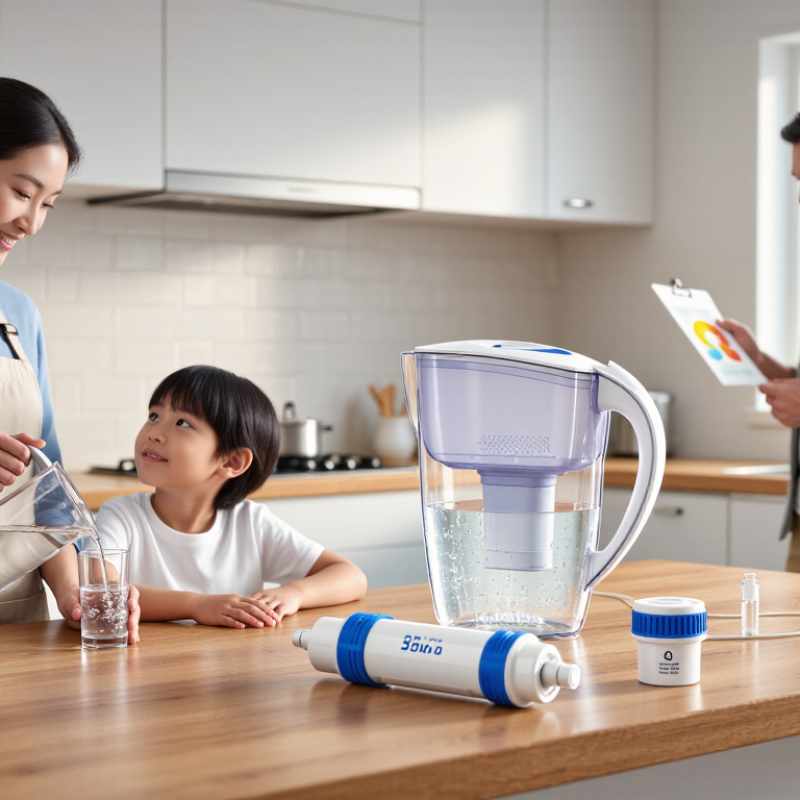
Before choosing a purification system, test the water you actually drink. Municipal reports provide useful background, but they may not reflect your building’s pipes. A certified laboratory can check lead, bacteria, nitrates, hardness, and other local concerns. Well water needs special attention after flooding, repairs, or changes in taste and smell.
Your household habits also matter. A family with infants may prioritize microbial safety and lead reduction. Someone in an older apartment may need protection from pipe-related contaminants. Hard water can leave white scale on kettles and shower doors, while sediment may cloud a glass. These clues are helpful, but they are not proof.
Match the treatment method to confirmed problems. Sediment filters remove particles, but they do not disinfect water. Activated carbon can improve taste and reduce some chemicals, depending on contact time and certification. Reverse osmosis may address several dissolved contaminants, yet it requires maintenance and produces wastewater. Ultraviolet treatment can control microorganisms, but it cannot remove metals or chemicals. Read performance claims carefully, and check replacement dates. I have seen households install advanced systems for problems they never had. That money could have supported regular testing instead. Retest after installation, especially when conditions change. A neglected filter may become a hidden weakness, not a solution.
Choosing a water system starts with knowing what is in your water, not with a filter’s broad claims. A utility water-quality report can flag common disinfectants and minerals. Private wells may need testing by a certified laboratory. Different technologies target different problems. Activated carbon can improve chlorine taste and odor and reduce certain organic compounds. It does not reliably remove dissolved salts or every metal. Check the exact contaminant-reduction claims for the specific filter model.
Reverse osmosis can reduce many dissolved substances, including some salts and metals, but performance depends on the membrane and maintenance. It also sends some water to a reject stream. Ultraviolet treatment can inactivate many microorganisms, but it does not remove chemicals or sediment. Clear water is not necessarily safe water. A sediment prefilter may protect other components, yet it cannot solve every contamination issue. Look for independent certification to a relevant NSF/ANSI standard, and confirm which contaminants were tested. Match that list to your water results. A practical detail: note filter-change dates and watch for slower flow or returning tastes. I used to assume one technology could cover everything; that was too simple. Testing and upkeep matter, even when the setup feels inconvenient.
Household size is a useful starting point, but daily habits matter just as much. A couple who cook often may use more filtered water than a larger household that mainly drinks tap water. Estimate how much water you need for drinking and cooking, then check the system’s rated daily capacity. Leave some room for busy days. Peak use matters.
For a kitchen drinking-water filter, compare capacity with your household’s typical use and note how often cartridges need replacement. A whole-house system must also handle simultaneous taps, showers, and appliances. Check its flow rate, not just its total treatment capacity; a unit that feels fine at one sink may slow several fixtures. That number moves.
Water quality can change the right choice. If possible, use a recent water test to identify what needs reducing, then confirm the system is designed for those specific concerns. Household estimates are imperfect, and guests or changing routines can shift demand. Keep a simple weekly note of filter use and pressure. It can reveal whether your original sizing assumptions still fit.
Choosing a water purification system requires more than comparing its purchase price. Installation can include plumbing changes, electrical access, drainage, permits, and professional labor. A point-of-use filter may fit beneath a sink, while a whole-house system needs space near the main water line. Measure twice. I once underestimated cabinet clearance and paid for an avoidable plumbing adjustment. Check local water test results before selecting treatment technology. The right system should address actual contaminants, not imagined problems.
Maintenance costs often decide whether a system remains reliable. Ask how often filters, membranes, lamps, or cartridges need replacement. Confirm their individual prices and availability. A cheap unit can become expensive with frequent service visits. Look for clear maintenance instructions and accessible components. Keep a written replacement schedule. Small leaks matter. They can damage cabinets and quietly increase water bills. Professional inspection may also be worthwhile when water quality changes or flow declines.
Operating costs include electricity, wastewater, pressure loss, and replacement parts. Some systems use extra water during filtration, while others consume more power continuously. Compare estimated annual usage, not only monthly claims. Request test data from independent laboratories when possible. Certification can support performance claims, but it does not remove the need to check household conditions. Leave room for uncertainty. Your water demand may grow, and maintenance estimates may prove optimistic. A simple cost worksheet can expose those differences before installation.
10 Water Purification Tips for Choosing the Right System
Verify safety standards before comparing features or prices. A polished box proves very little. Look for certification to recognized standards, such as NSF/ANSI requirements, when they match your water concern. Check the exact model number, not only the manufacturer’s product family. Confirm the certification through an independent, official database. A seller’s badge may be outdated.
Tip: Ask what the system removes. A filter designed for chlorine may not reduce lead, bacteria, or pesticides. Review laboratory reports and test conditions carefully. Claims should identify the contaminant, reduction rate, and replacement period. If the wording feels vague, pause. I once trusted a high removal percentage without checking the testing method. That was a useful mistake.
Reliability also depends on daily maintenance. Inspect housing seals, watch for leaks, and record cartridge changes on a simple calendar. Confirm that replacement parts remain available and affordable. Review the warranty, installation requirements, and expected flow rate. A certified system can still perform poorly when installed incorrectly or neglected. Ask a qualified water professional to interpret independent water test results, especially for private wells. Keep the report. Water quality can change.
| No. | Selection Focus | Safety Standard or Technical Point | What Reliable Evidence Should Show | Practical Verification Step |
|---|---|---|---|---|
| 1 | Identify the contaminants of concern | Water treatment performance must be matched to specific contaminants. No single treatment method removes every contaminant. | A current laboratory water report should identify measured levels of microorganisms, metals, chemicals, hardness, and other relevant parameters. | Obtain a recent test from the local water supplier or an accredited laboratory before selecting a system. |
| 2 | Check the performance claim | Look for a clearly defined reduction claim rather than a general statement such as “purifies everything.” | The documentation should name the contaminant, test method, influent concentration, reduction percentage, capacity, and operating conditions. | Compare the claimed contaminant reduction with the contaminants found in the water report. |
| 3 | Verify the applicable standard | Common drinking-water treatment standards include NSF/ANSI 42 for aesthetic effects, NSF/ANSI 53 for health-related contaminants, and NSF/ANSI 58 for reverse osmosis systems. | The product documentation should state the exact standard and the specific contaminant-reduction claims covered by that standard. | Confirm that the standard applies to the complete system and not only to an individual material or component. |
| 4 | Review certification details | Certification is meaningful only when it covers the intended model, configuration, and performance claim. | An independent certification listing should show the model number, certified standard, specific claims, and any limitations. | Search the certifier’s public directory using the exact model number and compare it with the product label. |
| 5 | Consider microbiological protection | UV systems are evaluated under NSF/ANSI 55, while microbiological claims for filters and membranes must be explicitly stated and verified. | Documentation should specify whether the system addresses bacteria, viruses, cysts, or other microorganisms, and under which test conditions. | Do not assume that a carbon filter or sediment filter disinfects water unless a verified microbiological claim is provided. |
| 6 | Match capacity to household demand | Flow rate, daily capacity, pressure range, and treated-water volume affect actual performance. | The specification sheet should list rated flow, maximum daily production, minimum and maximum pressure, and operating temperature. | Choose a system that can meet peak demand without exceeding its rated capacity or reducing contact time below the specified requirement. |
| 7 | Check filter replacement requirements | Filters and membranes have finite service lives and may lose effectiveness when capacity is exceeded. | The maintenance schedule should state replacement intervals, rated capacity, compatible replacement parts, and disposal instructions. | Estimate annual replacement costs and confirm that replacement components will remain available throughout the expected service life. |
| 8 | Assess material safety | Materials that contact drinking water should be evaluated for potential leaching and suitability for potable-water use. | Look for documentation covering drinking-water contact materials, extraction testing, and compliance with applicable material-safety requirements. | Review the product data for tubing, housings, seals, storage tanks, and other wetted components rather than checking only the main filter. |
| 9 | Evaluate installation and cross-connection risks | Incorrect installation, backflow, leaks, or stagnant water can create safety problems even when the treatment technology is suitable. | Instructions should include installation diagrams, pressure limits, backflow-prevention guidance, sanitation procedures, and leak-testing steps. | Use a qualified installer where required and verify that treated water cannot flow backward into the untreated supply. |
| 10 | Review reliability and ongoing support | Consistent performance depends on quality control, maintenance guidance, replacement parts, and traceable technical information. | Reliable documentation should include a dated performance sheet, installation manual, maintenance instructions, warranty terms, and contact information for technical support. | Prefer systems with transparent test data, clear service procedures, readily available parts, and no unsupported “100% removal” claims. |
Estimate daily drinking and cooking needs, then compare them with the system’s rated capacity. Leave room for busy days.
No. Daily habits matter. A couple who cooks often may use more filtered water than a larger household.
Compare typical use, daily capacity, flow rate, and cartridge replacement frequency. Keep a simple weekly usage note.
Check flow rate during simultaneous showers, sink use, and appliance operation. Total treatment capacity alone can mislead.
Use a recent water test when possible. Match the system to specific concerns, not vague claims.
Check the exact model number in an independent official database. A seller’s badge may be outdated.
Claims should identify the contaminant, reduction rate, testing conditions, and replacement period. High percentages need context.
Inspect seals, watch for leaks, and record cartridge changes on a calendar. Keep replacement parts available and affordable.
Yes. Incorrect installation or neglected maintenance can reduce performance. A certification is not a guarantee of daily results.
Ask for help interpreting independent test results, especially with private wells. Keep the report because water quality can change.
Choosing the right Water Purification system begins with understanding your water quality and identifying the contaminants that need to be removed. Test your water source, consider its taste, odor, hardness, and safety concerns, then compare available technologies such as sediment filtration, activated carbon, membrane treatment, or disinfection. Each method serves different purposes, so the best choice should match your household’s specific purification needs rather than rely on unnecessary features.
You should also select a system with enough capacity for your household’s daily water use and review its installation requirements, replacement schedule, energy consumption, and long-term operating costs. Before purchasing, check that the product follows recognized safety standards and has reliable performance documentation. A dependable system should be easy to maintain, provide clear instructions, and include accessible replacement components. By balancing water quality, filtration performance, household demand, upkeep, cost, and verified safety, you can choose a practical solution that delivers cleaner water over time.

BS Water