Hungary, situated at the heart of the Carpathian Basin, serves as a vital hydrological crossroads for Central Europe, with the Danube and Tisza rivers defining its primary aquatic ecosystems. Consequently, water resources management within the nation is under strict surveillance. Industrial manufacturing hubs in regions such as Győr-Moson-Sopron, Borsod-Abaúj-Zemplén, and the Budapest metropolitan zone generate complex, color-intensive wastewater. Industries including textiles, pulp and paper, automotive coatings, and chemical processing frequently struggle to remove organic colorants, dyes, and complex chemical compounds from their effluents.
Under the EU Water Framework Directive (Directive 2000/60/EC) and Hungary's national legislation (specifically Government Decree 220/2004 (VII. 21.) regarding the protection of surface waters and groundwater), direct discharge of colored wastewater is heavily penalized. Color in wastewater not only impairs aesthetic values but also critically diminishes light penetration, disrupting aquatic photosynthesis and ecosystems. Modern dicyandiamide-formaldehyde polymer-based Water Decoloring Agents represent a highly sophisticated solution to these ecological and regulatory challenges.
"For Hungarian manufacturing plants, meeting local environmental thresholds requires transitioning from conventional coagulants to tailored high-charge cationic polymeric decoloring formulations. Our solutions help industries achieve up to 99% color removal while optimizing chemical sludge generation."
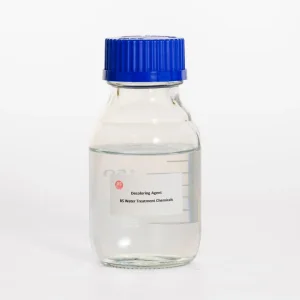
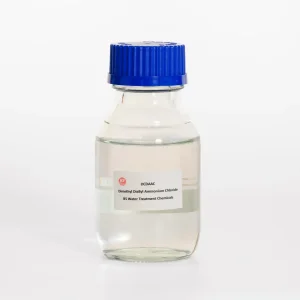
Water Decoloring Agents (WDA) are strongly cationic dicyandiamide-formaldehyde copolymer resins. These high-molecular-weight polymers function primarily through charge neutralization, adsorption, and bridging. In industrial effluents, dyes (specifically reactive, acid, direct, and disperse colorants) carry net negative electrostatic charges. The dense concentration of positive active groups (quaternary ammonium salts) along the WDA molecular chain attracts and destabilizes these anionic dye particulates.
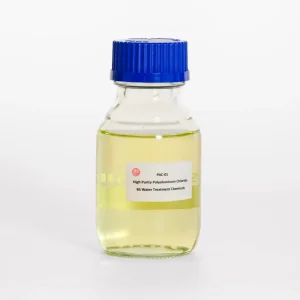
Once the electrostatic double-layer is neutralized, the polymer chains facilitate inter-particle bridging, drawing the destabilized dye molecules into micro-flocs. When combined with inorganic coagulants such as Poly Aluminium Chloride (PAC) or high-molecular-weight Polyacrylamides (PAM), these micro-flocs coalesce into large, shear-resistant macro-flocs that settle out of the liquid phase rapidly. This dual action significantly lowers both the Chemical Oxygen Demand (COD) and biochemical load of the wastewater.
Achieves >98% color removal on reactive, acid, and direct dye systems by forming stable polymer-dye complexes.
All raw materials and polymer batches comply with strict EU safety, health, and environmental standards.
Works in harmony with PAC and PAM to reduce settling time and cut down sludge volume by up to 35%.
On a global scale, the demand for water treatment chemicals is driven by water scarcity and increasing stringency of industrial discharge laws. Globally, the textile and printing sectors remain the primary consumers of decoloring technologies. However, in Central Europe—and Hungary in particular—unique macro factors shape the market. The high mineral content of Central European surface waters (which are generally hard and rich in hydrogen carbonates) affects the solubility and performance of typical flocculants.
Our research shows that water treatment agents deployed in Hungary must possess excellent stability across a broad pH range and high shear resistance. With Hungary serving as an automotive and machinery manufacturing hub, wastewater often contains a mixture of synthetic coolants, emulsified oils, and paint pigments. Consequently, the water decoloring agent must be versatile enough to break complex organo-metallic dyes and emulsions simultaneously, without demanding massive capital expenditure on dedicated multi-stage treatment reactors.
As EU environmental requirements tighten, the future of water treatment agents points toward green, biodegradable, and zero-impurity polymers. Wuxi BS Water Treatment Chemicals is actively researching modified biological polymer derivatives that match the cationic charge density of synthetic dicyandiamide-formaldehyde polymers while offering accelerated biodegradation rates. This forward-looking approach ensures our Hungarian and European partners remain ahead of upcoming EU chemical restriction drafts, securing long-term compliance and operational sustainability.
Receive a customized chemical dosing profile and technical consultation tailored specifically to your plant's raw wastewater composition and local Hungarian discharge limits.
Send Inquiry Now
Wuxi BS Water Treatment Chemicals Co., Ltd. brings 27 years of expertise directly to Hungarian industrial operations. Whether you are dealing with challenging reactive dyes in Győr or requiring municipal-grade polymers in Budapest, our engineers are ready to assist.
 BS Water