High-performance polymeric formulations deployed in major South American industrial treatment facilities for optimal color removal and particulate precipitation.
Brazil stands as a powerhouse of South American industrial output, housing large-scale manufacturing clusters in regions like São Paulo, Santa Catarina, Minas Gerais, and Rio Grande do Sul. Sectors such as textile manufacturing, pulp and paper processing, sugar-energy (ethanol), and chemical synthesis contribute heavily to the national GDP. However, these sectors are simultaneously the largest consumers of process water and the largest generators of highly colored industrial wastewater.
In the textile hubs of Americana (SP) and Blumenau (SC), wastewater treatment plants (WWTPs) grapple with complex, highly colored, and chemically stable reactive dye mixtures. Under the strict regulatory frameworks set by CONAMA (Conselho Nacional do Meio Ambiente) Resolution No. 357 and 430, direct discharge of visibly colored effluents into receiving watercourses is strictly illegal. Standard biological treatments and conventional inorganic coagulants are often insufficient to break down these recalcitrant organic dye structures, necessitating specialized polymeric decolorizers.
Compliance with local environmental state bodies such as CETESB (São Paulo), FATMA/IMA (Santa Catarina), and FEAM (Minas Gerais) requires not just achieving a low turbidity count, but completely removing the visual color index. Discharge of water containing artificial coloring can disrupt photosynthesis in aquatic plant life, leading to the eutrophication of critical Brazilian river systems like the Tietê and Paraíba do Sul.
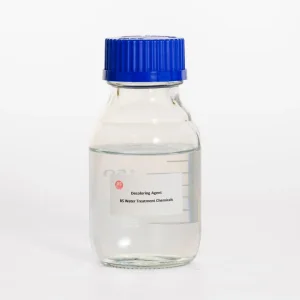
Our range of Water Decoloring Agents (WDA) operates via highly active cationic polymeric chains. By providing massive positive charge density, these polymers rapidly destabilize and neutralize anionic soluble dyes (such as reactive, acid, and disperse dyes). This forms dense, easily settleable flocs that can be easily removed through flocculation, flotation (DAF), or sedimentation processes, ensuring seamless compliance with municipal and federal discharge norms.
Engineered dicyandiamide-formaldehyde copolymerization designed for rapid complexation of refractory organic colorants.
The core active compound in our Water Decoloring Agent is a high-molecular-weight quaternary ammonium cationic polymer. Synthesized under controlled polymerization parameters, the polymer contains multiple positively charged active sites that target the electron-rich sulfonate and carboxyl groups present in soluble textile dyes.
Dyes dissolved in water carry negative charges to remain stable. Our cationic polymer introduces strong positive charges that neutralize these surface potentials, collapsing the electrostatic barrier between dye molecules.
Once neutralized, the long-chain polymer adsorbs multiple dye molecules simultaneously. This physical "bridging" phenomenon links micro-particles into visible, stable macromolecular flocs.
Combining our WDA with inorganic coagulants like Polyaluminum Chloride (PAC) or PAFC compresses the electrical double layer, facilitating high-density floc sedimentation and reducing sludge volume.
Find the ideal water treatment chemical for your specific Brazilian industrial system requirements.
| Product Type | Active Content / Basicity | Primary Target Effluent | pH Range | Key Performance Indicators |
|---|---|---|---|---|
| Water Decoloring Agent (WDA) | ≥ 50% Active Polymer | Textile Dyeing, Printing Wastewater | 7.0 - 10.0 | 98%+ Color Removal, low sludge mass |
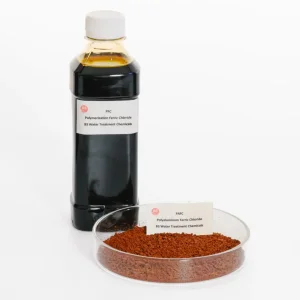
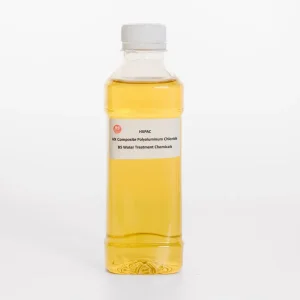
| Polymeric Aluminium Ferric Chloride (PAFC) | Al2O3 ≥ 28%, Fe ≥ 2% | Petrochemical, Industrial Sewage | 5.0 - 9.0 | Rapid flocculation, heavy metal precipitation |
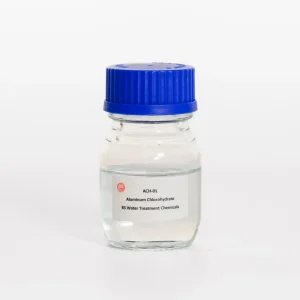
| Aluminum Chlorohydrate (ACH) | Al2O3 ≥ 23%, Basicity ≥ 83% | Municipal & Pulp Mill Process Water | 5.5 - 9.0 | High basicity, low dosing requirements |
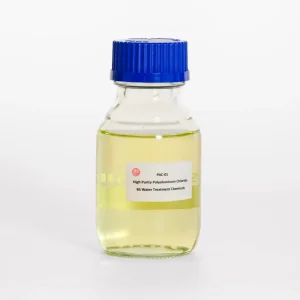
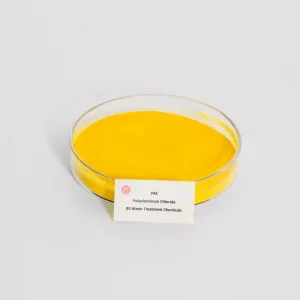
| Poly Aluminium Chloride (PAC) | Al2O3 ≥ 29% (Solid Version) | River Water, Drinking & Mining Water | 6.0 - 9.0 | Broad temperature tolerance, high turbidity removal |
Established in 1998, Wuxi BS Water Treatment Chemicals Co., Ltd. has spent nearly three decades pioneering advanced chemical solutions for water clarification. Operating out of our modern manufacturing plants in China, we manage every phase of polymerization, ensuring consistent molecular weights and zero structural variations from batch to batch.
Our facility boasts an annual output capacity of over 500,000 tons of water treatment agents, supported by a state-of-the-art R&D center and fully automated synthesis reactors. Our large warehouse network continuously holds more than 20,000 tons of finished products, guaranteeing immediate container availability for urgent shipments to Brazil.
Managing chemical imports into South America demands high logistics expertise and operational transparency. We provide a resilient supply chain with streamlined export paths from major Chinese ports directly to the Port of Santos, Port of Paranaguá, and Port of Rio Grande.
Our global shipping team handles all required documentation to facilitate smooth customs clearance, providing complete Certificates of Analysis (COA), safety data sheets (SDS) aligned with GHS standards, and packaging tailored for international ocean freight. Whether you require standard liquid totes (IBCs), 250 kg drums, or solid powder versions, we deliver stable formulations designed to withstand temperature fluctuations during long-distance transit.
Engineered polymers, inorganic salts, and advanced composites formulated for global industrial challenges and high-compliance markets.
Practical application tips, dosing methods, and chemically specific guidelines for optimization.
WDA should be diluted with clean water to a 10%–50% solution before application. The agent should be introduced directly at a point of high turbulence in the reaction chamber to ensure instant homogenization. For optimal results, dose WDA first, mix for 1-2 minutes, and then add PAC or anionic polyacrylamide (PAM) to accelerate floc formation and settling.
WDA performs exceptionally well within a pH range of 7.0 to 10.0. Dyes with sulfonate acid groupings are highly ionized in neutral-to-alkaline conditions, enhancing the cationic binding affinity. Adjusting the effluent to pH 8.0–8.5 before dosing generally yields maximum color removal efficiency.
By precipitating large organic chromophores and suspended polymers, WDA significantly reduces the Chemical Oxygen Demand (COD) of industrial effluents. Depending on the dye chemical class and configuration, COD removal rates of 50% to 85% are commonly achieved alongside color clarification.
As a mildly acidic organic polymer (pH 3.0-5.0 in concentrated form), WDA is slightly corrosive to carbon steel. We strongly recommend using corrosion-resistant materials for the dosing system, such as PVC, PP, PE, or Stainless Steel 316L, to prolong equipment life.
WDA is primarily synthesized for industrial wastewater color removal. For drinking water clarification, we recommend our specialized high-purity Poly Aluminium Chloride (PAC-01) or Aluminum Chlorohydrate (ACH), which comply with international health standards and residue limits.
Reach out to Wuxi BS experts. We provide complete laboratory jar testing, chemical pairing, and customized packaging solutions for our Brazilian partners.
 BS Water