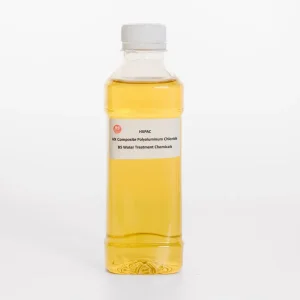
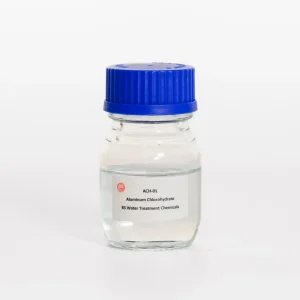
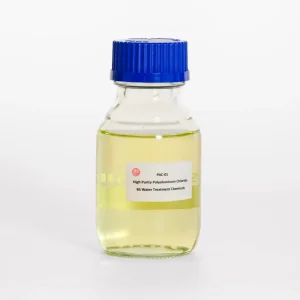
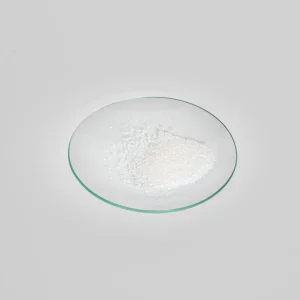
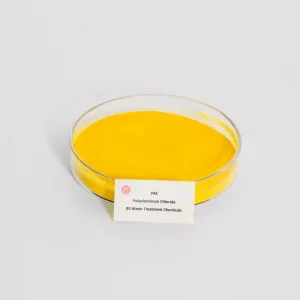
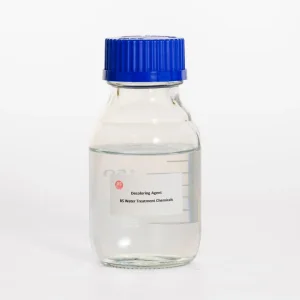
Ferric Sulfate [$\text{Fe}_2(\text{SO}_4)_3$], and specifically its modernized variant Polymeric Ferric Sulfate (PFS), has emerged as the premier inorganic macromolecular coagulant for modern municipal and industrial wastewater applications. Recognized for its excellent turbidity removal, chemical oxygen demand (COD) reduction, and outstanding phosphorus precipitation capacity, Ferric Sulfate operates via strong charge neutralization and sweep flocculation dynamics.
As globally stringent environmental regulations force treatment plants to reduce total phosphorus levels to micro-quantities (often below 0.1 mg/L), conventional aluminum-based coagulants are increasingly augmented or replaced by iron-based polymers. Chinese manufacturers, supported by state-of-the-art chemical synthesis infrastructure, supply high-purity Ferric Sulfate and PFS to global markets, ensuring optimal treatment metrics, zero heavy-metal residuals, and excellent cost efficiency.
Iron ions ($\text{Fe}^{3+}$) undergo rapid hydrolysis in water, forming polynuclear complexes that effectively neutralize negatively charged colloidal suspended particles, leading to rapid micro-floc formation.
Direct chemical precipitation converts soluble orthophosphate into insoluble ferric phosphate ($\text{FePO}_4$), which settle out of the liquid phase via gravity sedimentation.
The matrix of hydrated iron oxides acts as an exceptional adsorbent for trace heavy metals, including Arsenic ($\text{As}$), Lead ($\text{Pb}$), and Chromium ($\text{Cr}$).
Water characteristics differ dramatically based on regional geography, industrial layouts, and climate profiles. Wuxi BS Water Treatment Chemicals Co., Ltd. customizes the chemical basicity and concentration of Ferric Sulfate to address localized challenges:
In high-latitude regions, low water temperatures significantly inhibit the hydrolysis rates of standard aluminum salts. Polymeric Ferric Sulfate (PFS) exhibits high structural stability and functions efficiently at water temperatures as low as 4°C, preventing floc carry-over and maintaining low turbidity levels.
Industrial textile wastewaters contain complex chromophores and organic surfactants. The trivalent iron ions in Ferric Sulfate provide excellent charge neutralization, breaking the molecular structure of dyestuffs, achieving decolorization rates of over 95%, and significantly decreasing overall COD.
Highly emulsified oil-water mixtures require intensive destabilization. Ferric Sulfate effectively breaks down these emulsions, wrapping oil droplets within heavy iron floc structures. This process enables efficient removal during dissolved air flotation (DAF) cycles.
The water purification chemical sector is transitioning toward carbon-neutral production, smart dosing system integration, and zero residual contamination. We are actively developing next-generation coagulants by following a clear, performance-driven technical roadmap:
| Phase | Target Technology | Key Objectives | Environmental Impact |
|---|---|---|---|
| Short Term (1-2 Years) | High-Basicity Polymeric Ferric Sulfate | Basicity > 16%, rapid sedimentation, low sludge volume | Reduces sludge handling carbon footprint by 15% |
| Medium Term (3-4 Years) | Hybrid Organic-Inorganic Coagulants | Synergistic formulation of PFS and cationic polymers | Lowers required dosing rates and chemical inventory costs |
| Long Term (5+ Years) | Smart Dosing Closed-Loop Analytics | Integration of real-time turbidity and charge sensors | Prevents overdosing, reducing downstream iron carry-over |
Wuxi BS Water Treatment Chemicals Co., Ltd., established in 1998, represents China's leading manufacturing capacity in the water treatment sector. Our production facility features high automation, rigorous quality controls, and robust logistics infrastructure.
Located in the Yangtze River Delta industrial hub (Wuxi, Jiangsu), our facility utilizes vertically integrated raw material pipelines, sourcing high-purity iron byproducts and sulfuric acid directly from domestic suppliers. This robust supply model insulates our clients from raw material price spikes and ensures uninterrupted product availability.
Exporting chemical products internationally requires strict alignment with global trade safety and environmental regulations. Our products are fully registered, certified, and compliant with major international quality and environmental frameworks:
Operating under ISO 9001 for Quality Management and ISO 14001 for Environmental Management systems ensures production batch consistency and eco-friendly manufacturing.
Fully compliant with EU REACH regulations, enabling seamless import and distribution across all European Union member states.
Our drinking water grade formulations are manufactured to satisfy the strict health effects standards required for municipal drinking water treatment globally.
Factory founded to manufacture primary chemical coagulants for regional water systems.
Renamed to Wuxi Bisheng Water Treatment Agent Co., Ltd. following facility modernization and capacity upgrades.
Launched global trade operations, exporting products to Southeast Asia, Europe, and the Middle East.
Annual export sales exceeded $10 million, establishing Wuxi BS as a primary chemical partner.
Established a specialized Foreign Trade Department to enhance direct collaboration with global buyers.
Ferric Sulfate forms heavier flocs that settle faster than those generated by Alum. Additionally, iron-based coagulants operate effectively across a broader pH range (5.0 to 8.5) and perform well in colder temperatures, whereas Alum performance decreases in cold water.
Trivalent iron ($\text{Fe}^{3+}$) ions react directly with soluble orthophosphate ($\text{PO}_4^{3-}$) to create insoluble Ferric Phosphate ($\text{FePO}_4$), which precipitates out of solution. The reaction follows: $\text{Fe}^{3+} + \text{PO}_4^{3-} \rightarrow \text{FePO}_4 \downarrow$.
Liquid Ferric Sulfate remains stable for up to 6 months when stored in anti-corrosive containers made of FRP, PE, or rubber-lined steel. It must be kept in well-ventilated areas, protected from freezing temperatures, and away from direct sunlight.
Basicity indicates the degree of polymerisation of the iron complex. Higher basicity (typically 14-16% in premium formulations) provides higher molecular weight, stronger neutralization capacity, and larger, faster-settling flocs.
Our chemical engineering team is ready to analyze your wastewater profile and recommend optimal coagulant formulations. Contact Wuxi BS Water Treatment Chemicals Co., Ltd. today.
 BS Water

