Direct export configurations compliant with international and Latin American LATU criteria.
A technological whitepaper assessing the performance challenges and application requirements for Polyaluminium Chloride (PAC) coagulants in Southern South America.
Uruguay, characterized by its extensive agricultural basins, intensive forestry, and a strong meat-processing (frigoríficos) sector, faces distinct challenges in raw water purification and wastewater remediation. The state water authority, OSE (Obras Sanitarias del Estado), governs drinking water purification processes, requiring high-basicity coagulants that produce minimal residual aluminum and settle rapidly in low-temperature winter months.
Simultaneously, Uruguay has become a major global hub for short-fiber cellulose production, represented by massive pulp mills such as UPM (Fray Bentos and Paso de los Toros) and Montes del Plata (Conchillas). The processing of Kraft pulp yields highly colored, alkaline wastewater containing complex lignin fractions, hemicellulose derivatives, and suspended wood fibers. Remediating these effluents to meet strict DINAMA (now DINACEA - Dirección Nacional de Calidad y Evaluación Ambiental) discharge guidelines demands advanced inorganic polymers like Polyaluminium Chloride (PAC). PAC outperforms traditional aluminum sulfate (alum) by functioning effectively across a broad pH range and at lower dosages, significantly decreasing sludge volume index (SVI).
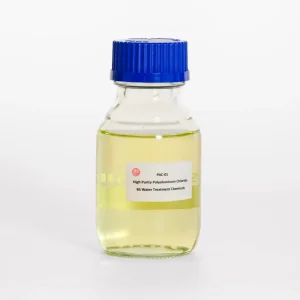
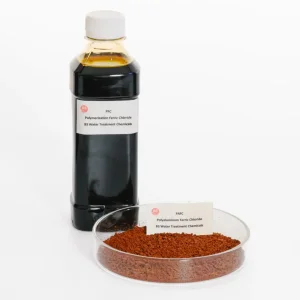
Polyaluminium Chloride (PAC) is synthesized by reacting high-purity hydrochloric acid with aluminum hydroxide. The generalized formula $[Al_2(OH)_nCl_{6-n}]_m$ dictates its polymer structure, where basicity ($n/6 \times 100\%$) represents the degree of polymerization. Basicity is the primary indicator of coagulant speed, floc size, and buffering demand:
| Parameter / Specification | High Purity Grade (PAC-01) | Drinking Water Grade (Solid) | Industrial Grade (Solid) | Liquid PAC Version |
|---|---|---|---|---|
| Al2O3 Content (%) | ≥ 30.0% | ≥ 29.0% | ≥ 28.0% | 10.0% - 17.0% |
| Basicity (%) | 45.0% - 85.0% | 50.0% - 85.0% | 50.0% - 90.0% | 40.0% - 90.0% |
| Water Insoluble Matter (%) | ≤ 0.1% | ≤ 0.6% | ≤ 1.5% | ≤ 0.2% |
| pH Value (1% water solution) | 3.5 - 5.0 | 3.5 - 5.0 | 3.5 - 5.0 | 3.5 - 5.0 |
| Heavy Metals (As / Pb / Cd) | Meets strict NSF/ANSI Standard 60 | Within international limits | Industrial standard compliance | Meets local environmental codes |
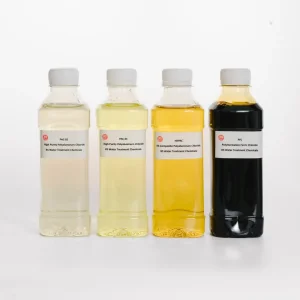
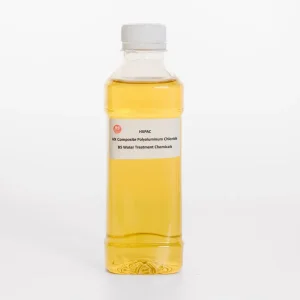
Internationally, water treatment chemistry is moving away from monomeric metal salts (such as ferric chloride and aluminum sulfate) towards pre-polymerized coagulants. By pre-hydrolyzing the aluminum ion during manufacture, PAC minimizes pH depression in treated waters, reducing the need for post-treatment pH adjusters like lime or sodium hydroxide. Additionally, the development of composite polymers, such as Polymeric Aluminium Ferric Chloride (PAFC), provides a dual-action mechanism where iron assists in heavy organic flocculation while aluminum optimizes turbidity clearance. Wuxi BS has integrated these advanced formulas into our production lines, serving global markets across North America, Southeast Asia, and South America.
Years of Engineering Experience (Est. 1998)
Annual Production Capacity (Metric Tons)
Finished Product Warehouse Capacity (Tons)
Global Enterprises & Utilities Served
How our PAC formulations solve specific environmental and industrial challenges across the country.
Our High Purity PAC (PAC-01) is formulated to treat surface waters with fluctuating turbidity and high organic carbon loads, such as the Santa Lucía River basin. Its low water-insoluble matter and low heavy metal index guarantee clean municipal drinking water that complies with UNIT standard norms.
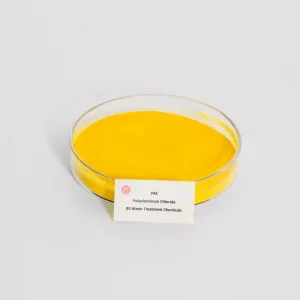
In mills producing short-fiber eucalyptus pulp, solid and liquid PAC versions are used for primary clarification. The pre-polymerized aluminum ions bind to dispersed lignin monomers, precipitating color compound polymers and reducing COD (Chemical Oxygen Demand) and BOD levels prior to biological aeration tanks.
Wastewater from meat processing and dairy production contains high concentrations of fats, oils, and grease (FOG) as well as proteins. Utilizing PAC in DAF (Dissolved Air Flotation) systems accelerates the separation of emulsified lipids, improving water clarity and reducing load on biological treatment systems.
Ensuring uninterrupted delivery and strict adherence to regulatory frameworks from Wuxi BS to Montevideo.
Raw materials meet ISO 9001 quality controls.
Heavy metal analysis for NSF/ANSI compliance.
25kg bags with PE liners or bulk IBC packaging options.
Direct routes to the Port of Montevideo.
LATU verification and Mercosur tariff optimization.
Local dosage tests and on-site technical support.
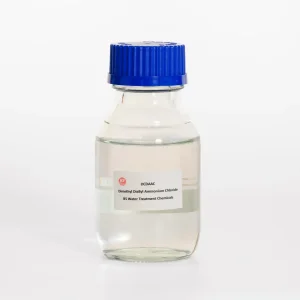
As chemical regulations tighten under Mercosur and global bodies, Wuxi BS is continuously updating its product formulations. Our R&D is focused on producing hybrid organic-inorganic coagulants, which combine PAC with polydiallyldimethylammonium chloride (PDADMAC) or polyacrylamide (PAM) in single-dose formulations. This integration reduces chemical handling steps on-site and lowers chemical feed requirements, contributing to reduced chemical usage and overall operating costs.
In addition, our manufacturing facilities utilize digital monitoring systems that continuously track basicity ratios and residual aluminum levels during the synthesis process. This guarantees that every batch shipped to Uruguay displays uniform density, solubility, and flocculating performance, reducing risk in municipal water operations.
Explore our full range of coagulants, flocculants, and decolorizing agents for municipal and industrial water treatment systems.
Technical answers to common queries regarding PAC chemistry, dosage optimization, and delivery logistics for Uruguay.
For surface waters in Uruguay, such as the Santa Lucía River or Rio Negro, which experience seasonal algal blooms and high organic loads, a medium-to-high basicity PAC (70%–80%) is generally recommended. The pre-formed poly-cationic structures in high-basicity PAC achieve rapid flocculation at low temperatures, minimizing the need for secondary pH adjustments.
Every shipment of PAC from our plant includes a certified Certificate of Analysis (COA) containing detailed heavy metal analysis (As, Pb, Cd, Cr). This documentation supports import registration and verification processes conducted by LATU, OSE, and Mercosur authorities.
Our solid PAC is packed in 25kg double-layer woven bags containing a polyethylene inner liner to prevent moisture ingress. The shelf life of dry PAC powder is 24 months when stored in a cool, dry warehouse environment, away from moisture and incompatible substances.
PAC offers several operational advantages: it performs across a broader pH range, reduces the required chemical dosage by 30% to 50%, forms larger and heavier flocs that settle faster, and generates lower overall sludge volume compared to aluminum sulfate. Additionally, its minimal impact on pH reduces the necessity for secondary pH adjustment chemicals.
The typical manufacturing and loading lead time is 7 to 14 days from our plant to the export port. Ocean transport time to the Port of Montevideo is generally 35 to 45 days. We coordinate directly with major shipping lines to optimize routing and ensure steady supply cycles for continuous operations.
Connect with Wuxi BS Water Treatment Chemicals Co., Ltd. for direct-from-factory quotes, free laboratory samples, and custom formulations designed for the Uruguayan industrial market.
Wuxi BS Water Treatment Chemicals Co., Ltd. possesses advanced production technology and over 27 years of research experience in water purification chemicals.
 BS Water