 BS Water
The Strategic Importance of Decolorization in Houston's Industrial Wastewater Ecosystem
The Greater Houston Area, anchored by the Houston Ship Channel, Harris County industrial centers, and the massive petrochemical complexes of Pasadena, Baytown, and Freeport, forms the backbone of the United States energy and chemical manufacturing sectors. However, this massive concentration of refining, organic chemical processing, pulp and paper packaging, and heavy manufacturing generates billions of gallons of highly complex wastewater daily. One of the most persistent and strictly monitored parameters in this wastewater is apparent and true color, along with its associated Chemical Oxygen Demand (COD) and Total Suspended Solids (TSS).
In municipal and industrial wastewater networks across Texas, color represents more than just an aesthetic issue. High color levels block sunlight penetration in aquatic environments, severely disrupting photosynthesis and depleting dissolved oxygen. Consequently, the Texas Commission on Environmental Quality (TCEQ), operating under federal Environmental Protection Agency (EPA) National Pollutant Discharge Elimination System (NPDES) guidelines, enforces strict limits on effluent discharge characteristics. For refining, pulp mills, and chemical processing facilities, failure to remove complex organic dyes, spent catalysts, lignins, and polymer intermediates can lead to substantial non-compliance fines, operational shutdowns, and severe reputational damage.
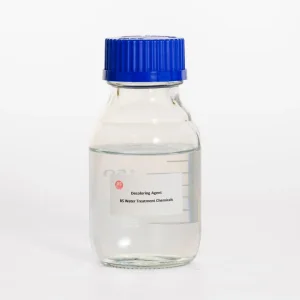
As a leading global manufacturer and direct-to-market supplier, Wuxi BS Water Treatment Chemicals Co., Ltd. offers highly specialized, high-charge cationic polymeric Water Decoloring Agents (WDA) engineered specifically to tackle these dense organic matrices. By optimizing wastewater treatment parameters in the Gulf Coast region, our solutions allow operators to meet discharge limits consistently while significantly reducing overall sludge volume and chemistry costs.
Scientific Principles: Chemistry of the Water Decoloring Agent (WDA)
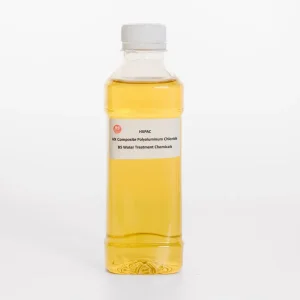
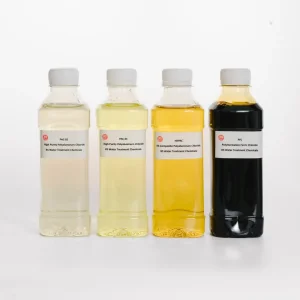
Water Decoloring Agents manufactured by Wuxi BS are specialized liquid cationic polymers, specifically dicyandiamide formaldehyde resins (CAS No. 55295-98-2). They function primarily through charge neutralization, adsorption, and bridging mechanisms. Most industrial colors—whether they arise from synthetic azo, acid, reactive, or disperse dyes, or naturally occurring humic and fulvic acids—carry a strong negative charge (anionic charge) in aqueous solution to remain soluble or dispersed.
Our formulation introduces a high density of quaternary ammonium cationic sites into the wastewater matrix. Here is the physical chemistry process of how our agent removes color:
- Electrostatic Neutralization: The positively charged quaternary nitrogen groups on the WDA polymer chain rapidly attract and bond with the negatively charged color-producing anions. This immediately neutralizes the repulsive forces that keep the dye molecules dispersed in water.
- Molecular Aggregation (Micro-flocculation): Once neutralized, the hydrophobic backbones of the dye molecules and the cationic polymer aggregate to form micro-flocs.
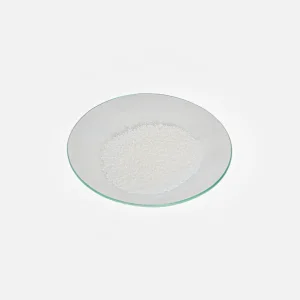
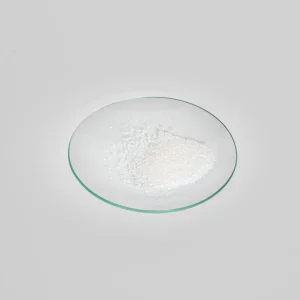
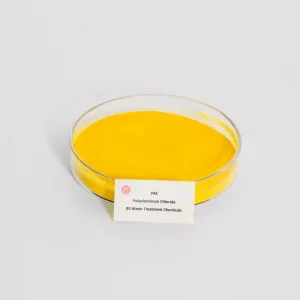
- Polymer Bridging and Flocculation: The high molecular weight of the BS-WDA polymer allows it to act as a bridging agent, gathering the micro-flocs into larger, heavy macro-flocs. When combined with inorganic coagulants such as Poly Aluminium Chloride (PAC) and anionic/cationic polymers like Polyacrylamide (PAM), these flocs rapidly settle out of suspension, leaving a crystal-clear supernatant.
Because the complex organic rings of dyes are trapped inside these insoluble polymeric matrices, they are physically removed from the water stream rather than chemically oxidized, avoiding the generation of toxic chemical intermediates or carcinogenic amines that frequently result from chlorine- or ozone-based bleaching methods.
Comparative Performance: WDA vs. Traditional Treatment Methods
Traditional color removal relies heavily on active carbon adsorption or powerful chemical oxidation (Fenton’s reagent, sodium hypochlorite, ozone). While active carbon is highly effective, its regeneration and replacement costs are economically prohibitive for high-flow industrial installations. Chemical oxidation, on the other hand, requires massive chemical dosages, precise pH adjustments, and often increases dissolved solids (TDS) or introduces chlorinated organic byproducts (AOX) into the effluent.
Wuxi BS Water Decoloring Agents present a cleaner, more sustainable alternative. Operating across a broad pH range (normally 6.0 to 9.0), our polymers require minimal adjustment of the chemical feed. By forming a dense, fast-settling sludge, they require smaller clarifier footprints, lower energy consumption during dewatering, and do not corrode sensitive concrete or metallic piping systems within the treatment plant.

Wuxi BS Water Treatment Chemicals: 27 Years of Enterprise Strength
Founded in 1998, Wuxi BS Water Treatment Chemicals Co., Ltd. (originally established as Wuxi Bisheng Water Treatment Agent Co., Ltd.) has evolved over nearly three decades into an internationally recognized technology leader in water purification. With a deep commitment to quality control and raw material synthesis, we specialize in high-capacity manufacturing of coagulants, flocculants, and specialized color-removal resins.
Our industrial production capabilities are globally competitive:
- Annual Sales & Production Volume: Exceeds 500,000 tons, ensuring that we can comfortably fulfill bulk municipal and industrial contracts without delay.
- Storage Capabilities: A finished product warehouse of over 20,000 tons allows for immediate supply buffers and rapid shipment schedules to global logistics hubs.
- Global Logistics & Export Footprint: Since 2007, our products have been exported to Europe, Southeast Asia, South America, and North America. Wuxi BS has successfully built stable shipping channels to the Port of Houston, serving large-scale Texas distributors, chemical blenders, and industrial end-users.
- Comprehensive Certifications: Our production lines operate under strict ISO 9001:2015 Quality Management and ISO 14001:2015 Environmental Management standards. Every batch of Water Decoloring Agent is subjected to rigorous testing, including molecular weight distribution analysis, active content verification, and performance jar-testing.